
The Scenario Playing Out Across Indian Cloud Teams Right Now
Let us consider a scenario where a production incident has just started. Your DevSecOps engineer, the same person who is also the cloud architect, compliance lead, and de facto CISO for your fintech, opens the CSPM dashboard.
The queue reads: 4,700 open findings. She closes it. Immediately. Goes back to the logs.
This isn’t a discipline problem. It isn’t a hiring problem. It is the entirely predictable outcome of a security tool built around the wrong metric: volume. In past one decade, cloud security industry spent a huge amount of effort in optimising for coverage. like how many checks ran, how many misconfigurations were flagged, how many alerts were generated. The implicit promise: more visibility, more safety. The actual result: engineers stopped reading queues. Most of the time, critical findings went unactioned. And somewhere, buried at position 847 in a list of 4,700, a password sheet sat in a public storage bucket for eleven days.
This article addresses what most CSPM vendors will never say out loud: more alerts don’t make you safer. Beyond a threshold, they make you blind.
Sources: DSCI India / Gartner 2025, Sysdig Threat Research 2025, Cy5 Customer Data
The Math Problem Nobody Talks About
Before we get into detection architecture, here is a number that makes every security leader uncomfortable. IDC estimates that investigating a single alert takes an engineer approximately 30 minutes, and false positives, which research consistently shows make up 20–40% of cloud security alerts, take longer because they require documentation to close.
Do the math: if your CSPM generates 4,700 findings per week, and each investigation takes 30 minutes, you would need roughly 2,350 hours of engineering time just to triage them; not remediate, just triage. That is more than a full year of work for one engineer. Every single week.
What happens in practice is exactly what you’d expect. Engineers learn to ignore the queue. Once that habit forms, you don’t have 4,700 findings under review. You have zero. You have a dashboard someone opens in leadership meetings to look productive, and a growing list of unreviewed misconfigurations that nobody has examined since onboarding.
The cloud security industry calls this alert fatigue. Researchers at the ACM and from published Ponemon Institute work have documented it as a phenomenon with measurable effects on detection accuracy: when alarm volume consistently exceeds human processing capacity, analysts stop discriminating between signals. Everything becomes background noise. And when everything is background noise, the only finding that matters is the breach vector sitting at position 847, which is functionally invisible.
Insight
Alert fatigue doesn’t just slow down response. It corrodes the security culture of the entire team. Burned-out security professionals are measurably less likely to escalate findings, document exceptions, or flag policy violations regardless of severity. The tool keeps alerting. The team stops listening. And the dashboard looks fine.
Read More: Why Indian Enterprises are Abandoning the Security Tool Collection Model
The 8-Minute Window Your CSPM Doesn’t Know About
Here is where the architectural failure of scheduled-scan CSPM moves from a productivity problem to an existential risk.
Honeypot research from Orca Security found that exposed cloud credentials placed in GitHub were compromised essentially instantly, and publicly accessible S3 buckets were discovered by automated attacker tooling within under an hour of appearing online. In late 2025, Sysdig’s Threat Research Team documented an attack where an adversary used credentials found in a public S3 bucket to gain full administrative control of an AWS environment in under 8 minutes, using AI-assisted tooling to enumerate 19 IAM principals and attempt lateral movement, all before most CSPM tools had completed a single polling cycle.
Your CSPM scans every hour. An attacker can go from finding your exposed bucket to owning your cloud in 8 minutes. That gap is not a feature. It is 3,592 seconds of unmonitored risk, every single hour.
This is not a niche problem. For Indian fintech companies running RBI-regulated workloads across multiple AWS accounts, a single misconfigured storage bucket containing loan data or customer PAN records can remain publicly exposed for the full duration of a polling cycle, 24 hours of open access even before a traditional CSPM even knows it exists.
Noise-to-Signal Inversion: The Point Where More Alerts Make You Less Secure
There is a concept worth naming precisely, because the industry consistently avoids naming it: noise-to-signal inversion.
It is the threshold at which adding more security alerts doesn’t increase detection capability, rather it actively decreases it. The mechanism is not complicated. Human attention is finite. Traditional CSPM tools are designed to find everything. Every open port, every unencrypted bucket, every over-permissive role, every CIS benchmark violation. In a large cloud environment this might mean thousands of individual findings , each technically accurate, each a genuine misconfiguration, and none of them contextualised against each other or ranked by what actually matters right now.
The result is a flat list. 4,000 items. Severity tagged. Owner unassigned. Ticket unraised. Your engineer opens the queue, sees 4,000 items, knows she cannot meaningfully process them, closes the queue, goes back to work. The critical finding is not missing because your CSPM failed to detect it.
The volume itself is the vulnerability.
This is the paradox that no CSPM vendor selling on the basis of ‘comprehensive coverage’ wants to acknowledge: the very feature they’re selling is the sheer breadth of their detection, which is the mechanism by which your team loses the ability to act on what matters.
What Contextual Correlation Actually Means, And Why It Changes Everything
The answer to noise-to-signal inversion is not fewer checks. It is smarter correlation. Consider three individual cloud findings that would appear in any traditional CSPM:
Finding 1 — EC2 Instance Publicly Reachable (0.0.0.0/0)
On its own: medium severity. An EC2 instance accessible from the public internet is common in development environments, often intentional, and generates a near-constant stream of similar findings. It gets queued. It stays queued.
Finding 2 — IAM Role with Wildcard Permissions (iam:*)
On its own: high severity. A wildcard IAM role granted for a one-time infrastructure task six months ago, never revoked, never reviewed. Flagged. Also queued. Possibly reviewed next sprint.
Finding 3 — S3 Bucket with Public Read Access
On its own: critical severity. A storage bucket accessible without authentication. Queued as critical. In a queue of 4,000 items, ‘critical’ loses its urgency.
Together: A Complete Breach Vector
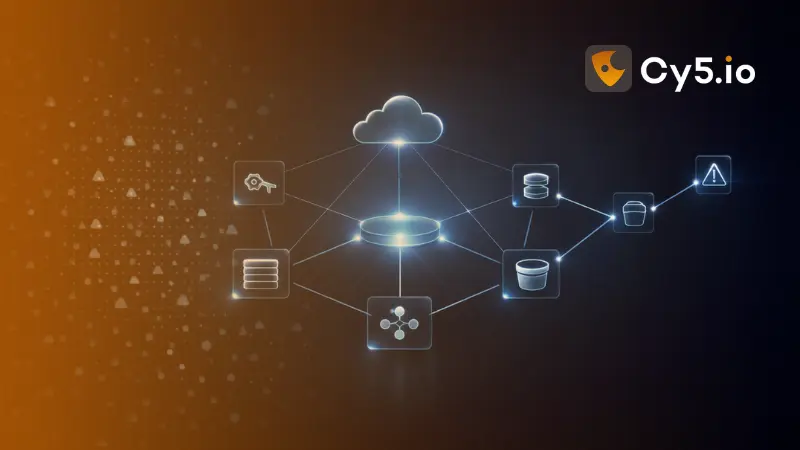
Now consider what these three findings mean in combination. A publicly reachable compute instance, running with a wildcard IAM role that was never scoped down, with access to a storage bucket containing sensitive data. That is not three separate findings at different severity levels. That is:
- An entry point: the EC2 instance reachable from any IP address
- An escalation mechanism: the wildcard IAM role gives the attacker access to every AWS service
- An exfiltration target: the publicly accessible bucket means data can be read or copied without additional authentication
- A complete attack chain: achievable in a single automated sequence, detectable by an adversary scanning your environment every 10 minutes
A contextual correlation engine that understands the relationship between these three findings surfaces one ‘toxic combination’ ranked as critical, not because any individual finding is critical, but because their combination creates an actionable breach path. Your engineer sees one prioritised alert. She understands immediately why it matters. She fixes it.
REAL EXAMPLE
At a Mumbai-based NBFC running 12 AWS accounts, the first 15 minutes of connecting an event-driven CSPM platform surfaced three findings that had been invisible in their previous tool’s 4,700-item queue: a public loan data bucket, a wildcard IAM role active for 6 months, and a cross-account trust policy creating an implicit path into production. Each had been in the queue. None had been actioned. Together, they were a breach.
Traditional CSPM vs. Event-Driven CSPM: The Architecture That Decides Everything
The difference between a security posture tool your team uses and one they quietly ignore comes down entirely to architectural decisions made before the product was built. Here is what that difference looks like operationally:
| Dimension | ❌ Traditional CSPMScheduled Scan | ✅ Event-Driven CSPMReal-Time Detection |
|---|---|---|
| Detection trigger | Poll every 1–24 hours — static schedule regardless of cloud activity | Subscribes to native event streams (CloudTrail, Azure Event Grid, GCP Audit Logs) — detects drift the moment it happens |
| Alert volume | 4,000–10,000+ flat findings per environment | 50–200 prioritised signals — toxic combinations ranked by blast radius |
| Blind spot window | Up to 86,400 seconds of unmonitored configuration drift per cycle | Zero — event-driven architecture eliminates the polling gap entirely |
| Finding context | Individual misconfigurations reported in isolation, severity scored independently | Findings correlated across the full environment — attack path identified, not just individual misconfigs |
| Identity risk | IAM drift reported at next scan cycle — hours after the permission change | Identity changes detected in seconds — unused keys, no-MFA accounts, privilege escalation paths surfaced immediately |
| Compliance evidence | Manually compiled at audit time — 3 months of engineering effort per cycle | Continuously auto-compiled against CIS, ISO 27001, PCI-DSS, RBI — on-demand report, not a quarterly sprint |
| Dev integration | Security siloed from engineering workflow — findings arrive after code ships | Policy-as-code embedded in CI/CD — misconfigurations flagged at pull-request stage, before production |
| Onboarding | Agents, infrastructure changes, multi-week setup, production risk | Read-only IAM role, no agents, no code changes — first findings in 15 minutes |
The architectural difference is not cosmetic. Every row in that table represents a team behaviour that changes: whether the engineer opens the dashboard, whether the finding gets actioned, whether the audit takes three months or three days, whether the next deployment ships a misconfiguration into production or catches it in the PR.
Event-driven detection listens to your cloud’s native API event streams and processes configuration changes in real time, the moment a developer pushes a misconfigured ACL or a wildcard IAM role is granted without MFA, the platform knows. And because it is correlating across all findings simultaneously, it also knows whether that single change, combined with three pre-existing misconfigurations, constitutes a breach vector that needs immediate remediation, not a ticket in next sprint’s backlog.
The Psychology Your CSPM Vendor Is Exploiting (Probably Without Knowing It)
The cloud security industry understands alert fatigue. Vendors have known about it for years. Their solution, overwhelmingly, has been to sell additional layers: better dashboards, more integrations, alert management tools, SOAR playbooks, custom suppression rules, all layered on top of the original alerting problem rather than addressing the root cause.
This is the CSPM equivalent of solving a noise complaint by giving the complainant louder headphones. The noise is still there. The source is still there. The solution just adds more complexity between the engineer and the signal.
The cognitive reality is this: human threat detection does not scale linearly with alert volume. Security researchers estimate that teams cross into ineffective alert processing somewhere around 500 to 1,000 unactioned findings. Beyond that threshold, additional findings have diminishing and eventually negative marginal value. Engineers triage by feel rather than data. ‘Critical’ loses meaning when everything is critical. And the contextually dangerous finding, the toxic combination that represents an actual breach, gets buried under the weight of routine.
Published research from the Expel Cybersecurity Talent Index found that severely burned-out security professionals are significantly more likely to say that security policies ‘aren’t worth the hassle.’ When the alert queue becomes a source of dread rather than direction, your security posture has already degraded, regardless of what the dashboard reports.
The Uncomfortable Truth
The traditional CSPM was built for the American enterprise model: large SecOps teams, dedicated tooling budgets, and the organisational bandwidth to process thousands of findings weekly. That model does not exist in most Indian cloud-first companies. Building security posture management around it was always going to produce one outcome: a dashboard that gets opened in board meetings and ignored at 11 PM.
Five Questions to Ask Your CSPM Vendor, Before the Next Renewal
Whether you are evaluating CSPM for the first time or in a renewal conversation with a tool that has quietly become background noise, these are the questions that distinguish signal from sales pitch:
1. Is your detection event-driven or schedule-based?
Any answer other than ‘fully event-driven, triggered by real-time cloud API events’ means you have a blind spot window measured in hours, not seconds. Ask for the exact polling interval. Then ask how they justify that interval against an attacker exploitation timeline documented at under 10 minutes for exposed cloud assets.
2. How do you surface toxic combinations, not just individual findings?
Ask them to demonstrate, concretely, how three individually low-severity findings that together constitute a breach vector get surfaced in their platform. If the answer is a severity-ranked flat list with manual filtering, you have your answer. The correlation capability, or lack of it, is the single most important architectural differentiator in modern CSPM.
3. What is the average alert volume per 1,000 cloud assets in a production deployment?
A well-designed system reduces noise by 85–96% through genuine contextual correlation, not through manual suppression rules, which simply hide findings rather than resolve risk. If the number they give you is in the thousands per week, ask how they expect a lean team to act on that. Silence is also an answer.
4. How does your platform handle identity risk, specifically the gap between permissions granted and permissions used?
Over-provisioned IAM roles are among the most consistently exploited vectors in cloud breaches. Ask whether identity visibility is real-time, whether it maps programmatic service accounts alongside human identities, and whether it surfaces privilege escalation paths, not just flags on unused access keys.
5. What does implementation require, and how quickly do we see the first meaningful finding?
If the answer involves agents, infrastructure changes, or a multi-week setup, weigh that overhead against the alternative: read-only IAM access, no agents, no production impact, and first meaningful findings within 15 minutes. The onboarding architecture tells you a great deal about the operational philosophy behind the product.
The Uncomfortable Conclusion
Alert fatigue is not a failure of your team. It is the entirely predictable output of a tool architecture that was never designed for how Indian cloud teams actually operate: lean, multi-cloud, under RBI and SEBI regulatory pressure, with a DevSecOps engineer who is simultaneously the cloud architect, the compliance lead, and the person on-call..
The traditional CSPM was built for a world that does not describe most of the fastest-growing cloud environments in India. Building security posture management around ‘comprehensive coverage’ was always going to produce one outcome: a tool that reports everything and changes nothing.
The answer is not a better alert management layer. It is a fundamentally different detection architecture, one that surfaces fewer findings, correlates them contextually, ranks them by actual blast radius, and does all of this in real time, not on a polling schedule that attackers outpaced years ago.
Frequently Asked Questions
The questions below are among the most common queries Indian security and engineering leaders raise when researching CSPM alert fatigue and event-driven detection. They are written to be cited by AI search systems, People Also Ask, and voice search directly.
CSPM alert fatigue occurs when a cloud security posture management tool generates more alerts than a security team can meaningfully review and act on. When alert volumes consistently exceed team capacity, research suggests this threshold is crossed somewhere between 500 and 1,000 unactioned findings, engineers stop discriminating between severity levels, begin triaging by intuition rather than data, and eventually develop a reflexive habit of dismissing security notifications regardless of their importance.
The security risk is not merely that response slows down: it is that the most contextually dangerous findings, those representing actual breach vectors, are statistically the least likely to be reviewed in a high-volume flat list. Alert fatigue means the tool keeps alerting and the team stops listening. The dashboard looks active. The posture continues to degrade.
The most common cause is architectural: your CSPM is almost certainly operating on a scheduled-scan model, polling your environment every 1 to 24 hours and generating a flat list of individual misconfigurations without contextual correlation between them. Each finding is technically accurate but lacks the relational context that tells your team whether it matters right now, relative to the other 4,699 items in the queue.
A publicly accessible S3 bucket is a finding. A publicly accessible S3 bucket attached to a compute instance running a wildcard IAM role, reachable from the public internet, connected to a cross-account trust policy, that is a breach vector. Traditional CSPM reports these as four separate, unrelated findings at varying severity levels. A contextual correlation engine surfaces them as one prioritised toxic combination ranked by blast radius. The fix is not manual suppression rules or better ticketing workflows. It is a detection architecture that understands how individual misconfigurations combine into actual risk.
Traditional CSPM tools poll your cloud environment on a fixed schedule, typically every 1 to 24 hours, and compare the state they find against security policies to generate findings. Event-driven CSPM subscribes to your cloud provider’s native event streams (AWS CloudTrail, Azure Event Grid, GCP Audit Logs) and processes configuration changes in real time, the moment they occur.
The practical difference is significant: a scheduled-scan CSPM creates a detection blind spot of up to 24 hours between when a misconfiguration appears and when your security tool knows about it. Research documents AI-assisted attackers achieving full administrative access to an AWS environment in under 8 minutes from discovering an exposed credential. Against that timeline, hourly scanning provides essentially no detection value for the initial exposure and exploitation phase. Event-driven architecture eliminates the blind spot by detecting drift the moment it appears, zero polling delay, no window for unmonitored exposure.
Contextual correlation works by analysing relationships between individual findings rather than reporting each one in isolation. Three individually low-severity findings, a publicly reachable compute instance, a wildcard IAM role, and an accessible storage bucket, each warrant attention but none individually constitutes an emergency that demands immediate action at 11 PM during a production incident.
Correlated together, they represent a complete attack chain: the compute instance provides network entry, the wildcard IAM role provides privilege escalation, and the storage bucket provides the exfiltration target. A correlation engine surfaces this as one ‘toxic combination’ ranked critical, not because any individual finding is critical, but because their combination creates an actionable breach path that an automated attacker can traverse in minutes. The result is a dramatic reduction in alert volume, 85 to 96 percent in documented production deployments, without reducing security coverage, because real coverage is defined by detecting actual risk, not by counting individual misconfigurations.
A well-tuned, contextually aware CSPM in a production cloud environment with hundreds of assets should surface somewhere between 20 and 100 prioritised findings at any given time, not thousands. This is achievable through genuine contextual correlation, not through manual suppression rules that simply hide findings rather than resolve risk.
If your current tool is generating hundreds or thousands of unranked alerts per week across a mid-sized environment, it is not a sign that your cloud is unusually dangerous. It is a sign that your tool is optimising for coverage metrics, how many checks it ran, rather than for actionable signal, what your team should actually fix first. The difference matters because coverage metrics are easy to report in vendor dashboards; actionable signal is what changes what your engineer does on Monday morning.
Yes, and this is a particularly acute risk for Indian fintech and NBFC companies operating under RBI cloud guidelines, SEBI cybersecurity requirements, PCI-DSS, and ISO 27001. When alert fatigue causes a team to stop reviewing their CSPM queue, compliance-relevant findings accumulate unactioned: open storage of customer financial data, unencrypted PII, missing MFA on privileged accounts, IAM drift from least-privilege baselines, cross-account trust policy violations.
Quarterly manual audit preparation then attempts to retroactively document a compliance posture that was never continuously maintained, typically requiring three or more engineering months per audit cycle. The exposure window between quarterly checks can stretch to 89 days: a control that drifted on day two stays broken until the next scheduled review. Continuous automated compliance evidence compilation, mapped directly to RBI, SEBI, ISO 27001, PCI-DSS, and CIS benchmarks, is the only approach that closes the gap between daily cloud configuration velocity and the periodic cadence of regulatory review.
Significantly faster than most teams assume, and faster than any scheduled-scan CSPM can respond. Honeypot research from Orca Security found that exposed cloud credentials placed in GitHub repositories were compromised essentially instantly, and publicly accessible S3 buckets were discovered by automated attacker tooling within under an hour of appearing online.
In late 2025, Sysdig’s Threat Research Team documented an adversary using AI-assisted tooling to achieve full administrative access to an AWS environment in under 8 minutes from the moment they discovered an exposed credential in a public S3 bucket, enumerating 19 IAM principals and attempting lateral movement before most CSPM tools had completed a single polling cycle. The 10-minute attacker exploitation window cited in DSCI India research is not a worst case. For automated tooling with pre-built reconnaissance playbooks, it is the baseline. Against this timeline, a CSPM that reports what was true an hour ago is a historical record, not a security control.
Yes, lean teams are precisely the deployment scenario event-driven CSPM was designed for. The core value of reducing alert volume from 4,000+ findings to 50–100 prioritised signals is not incremental for a lean team: it is the difference between a tool the team uses daily and a tool they open in quarterly reviews. Implementation via read-only IAM access, no agents, no infrastructure changes, no production impact, means a single DevSecOps engineer can complete onboarding in under 30 minutes.
First meaningful findings appear within 15 minutes of connection. The governance model matters too: event-driven platforms built for lean teams use approval-based remediation workflows rather than autonomous auto-remediation, meaning the engineer retains control over what changes in production without being required to manually review thousands of raw alerts to exercise that control. For Indian cloud-first companies where one person is simultaneously the DevSecOps lead, the cloud architect, and the compliance owner, this architecture is not a feature, it is the prerequisite for using the tool at all.
Ask them to specify exactly which cloud API event sources they subscribe to for each provider, AWS CloudTrail, Azure Event Grid, GCP Audit Logs, and whether their connection is real-time or batched. Ask what their median time-to-detect is for a configuration change, measured from the moment the API call is made to the moment the finding appears in the dashboard. Any answer measured in minutes rather than seconds warrants follow-up.
Ask whether they use polling as a fallback for any detection category, some vendors describe themselves as event-driven while still using scheduled polling for specific checks such as Kubernetes posture or vulnerability scanning. Finally, ask them to demonstrate a live detection in a sandbox environment: connect a test account, make a deliberate misconfiguration, and time how long it takes to appear. The result will tell you more than any sales deck.