
What You’ll Learn
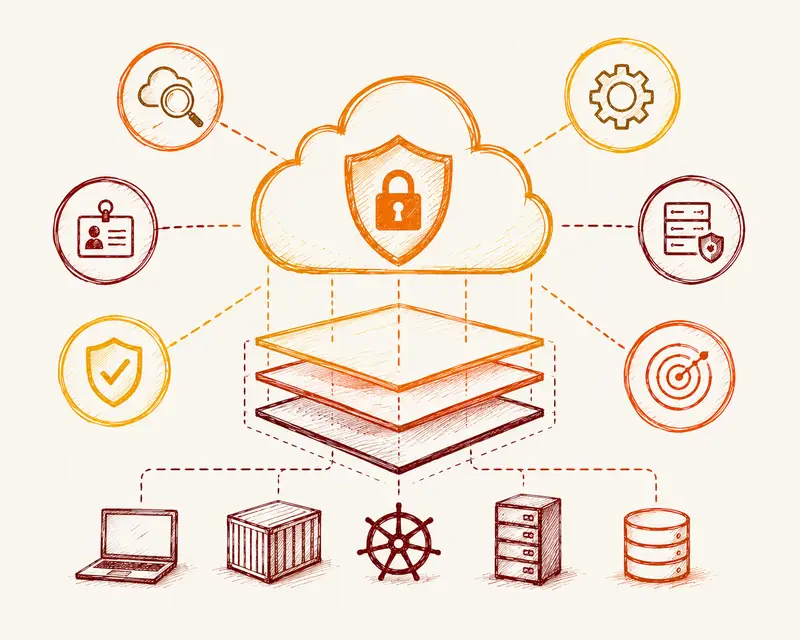
- The seven core components that make up a Cloud-Native Application Protection Platform (CNAPP) and why buying them separately costs you more than money
- How CSPM, CWPP, CIEM, KSPM, IaC security, API protection, and DSPM integrate to eliminate security tool sprawl
- The single misconfiguration class that CNAPP components catch before it becomes a CERT-In reportable incident
- Why Indian enterprises adopting CNAPP see 43% faster compliance audit cycles and 60% reduction in mean time to remediation (MTTR)
- A decision framework: which CNAPP components your organization actually needs right now versus which can wait
- Real implementation scenarios from Indian BFSI, SaaS, and GCC environments – what worked, what failed, and what the procurement committee didn’t anticipate
- The India-specific compliance mapping: how CNAPP components directly address CERT-In, RBI, SEBI, IRDAI, and DPDP obligations in ways discrete tools can’t
Let us consider a scenario where your DevOps lead sends a text on the Slack channel – “Cloud build failed (CSPM flagged 14 misconfigurations) during Terraform deployment. But unable to identify the ones that are blocking production.”
The CISO who is already taking care of multiple things for the upcoming RBI IT audit, replies – “Check the CNAPP console for runtime context. And someone confirm that CIEM isn’t flagging the same service account issue from last sprint.”
Three tools. Three consoles. Three different severity frameworks. An over-burdened security team trying to figure out what’s signal and what’s noise before morning standup using a traditional and outdated process.

This is the most common example of fragmented cloud security reality that Cloud-Native Application Protection Platforms as coined by Gartner were designed to eliminate. But most cloud security providers won’t tell you that CNAPP isn’t a product. It’s an architecture, a unified integration of seven distinct security components, each addressing a specific layer of cloud-native risk.
The objective of this blog is to comprehend different components of CNAPP, what they do, how they interoperate, and which ones you should have now and how you can implement the complete CNAPP architecture based on your cloud infrastructure. The prominent ROI of having an appropriate CNAPP architecture-based cloud security tool are cost optimization, reducing man-month, improving overall productivity of security implementation and handling, etc., which we will discuss throughout this blog.
What’s Actually Happening in Cloud Security Architecture
The Indian business cloud security landscape is maturing and evolving fast. CERT-In’s six-hour breach reporting mandate, the DPDP Act’s Cloud security isn’t getting simpler. It’s getting more granular and detailed.
A few years ago, securing cloud infrastructure largely meant locking down security groups, turning on logs, and tightening IAM policies. That was hard, but manageable with the right amount of human resources. Today, a typical Indian cloud-native businesses running multi-cloud workloads is dealing with Kubernetes clusters full of short-lived pods, CI/CD pipelines pushing infrastructure changes every hour, microservices talking to each other through APIs, serverless functions handling sensitive customer data, SaaS apps connected through OAuth, and hybrid identity setups that stretch from on-prem Active Directory to cloud IAM.
Every one of those layers creates a new way in. And most traditional security tools were built for a different era – static servers, clear perimeters, and centralized control. They were never designed for this kind of constant motion.
The consequence is predictable & visible: tool sprawl.
According to recent DSCI and NASSCOM leadership surveys, Indian CISOs are increasingly overwhelmed by ‘tool sprawl.’ Many enterprises find themselves managing a fragmented stack of over a dozen disconnected cloud security tools, from posture management to container scanning, each operating in its own silo.
In common scenarios, there is one for posture management (AWS Config or Azure Security Center). Another for workload protection (Trend Micro Deep Security). Separate tools for IAM governance (Oracle Identity Management or IBM Security Verify), container scanning (Clair), API security (Apigee (Google Cloud) or Kong), secrets management (CyberArk), log aggregation (Microsoft Sentinel or ELK Stack), and vulnerability management (Rapid7 Nexpose). Each bought at a different time. Each with its own dashboard. Each speaking a slightly different “severity” language.
The real cost isn’t just licensing – it’s mental fatigue.
When a CSPM flags a misconfiguration, the security engineer has to jump into the workload protection console to check if it’s being exploited. Then into the IAM tool to see whether an over-privileged service account is involved. Then into the container scanner to confirm whether the image has known CVEs. It’s not one investigation. It’s four stitched together under pressure.
Meanwhile, the clock is running. CERT-In’s six-hour reporting requirement doesn’t slow down because your tools don’t talk to each other. That’s where CNAPP Architecture-based cloud security platforms such as ion come into handy, crucial and productively useful, which we will walk around later.
Why Indian Cloud-Native Businesses Face Unique CNAPP Pressure
India’s regulatory environment has intensified faster than most organizations’ security maturity curves. Consider the convergence:
But regulatory frameworks didn’t lag behind. CERT-In’s 2022 cybersecurity directive introduced breach reporting and logging requirements with timelines tighter than what most global standards demand. RBI’s master direction on IT governance now requires regulated entities to maintain granular audit trails across cloud and hybrid environments. And the DPDP Act’s 2023 passage introduced data localization and consent management obligations that touch every layer of the cloud stack, from where compute happens to how API access is governed.
An Indian BFSI CISO managing simultaneous RBI and SEBI audits doesn’t have the luxury of asking three different vendors for compliance evidence from three different platforms. CNAPP’s value proposition for Indian enterprises isn’t philosophical, it’s operational: one compliance dashboard, one audit trail, one source of truth.
The breach usually wasn’t invisible. It was unactioned.
In our post-incident work with Indian enterprises, many cloud incidents traced back to misconfigurations or over-privileged access that had already been flagged by existing tools. The problem came later: alerts piled up, teams switched between consoles, and findings lacked enough runtime context to look urgent.
- Posture findings should enrich runtime alerts.
- IAM risk should be visible inside workload investigations.
- IaC issues should connect to live assets, not stop at code scan results.
- The team should investigate in one flow, not in a multi-console scavenger hunt.
- Do the modules actually share a common data model?
- Can one finding automatically pull posture, identity, and runtime context together?
- Do IaC, runtime, and entitlement findings appear in one investigation trail?
- Or is it just separate products placed behind one login?
What this means operationally: A NBFC running customer-facing applications on AWS can’t simply rely on native AWS security tools. They need continuous posture monitoring that maps to RBI’s control objectives, workload protection that catches runtime threats before they become reportable incidents, and identity governance that proves least-privilege access during SEBI audits.
What the Industry Gets Wrong About CNAPP
Most security leaders approach CNAPP adoption the same way they approached every other enterprise security purchase: by evaluating vendor feature checklists.
Does it have CSPM? Check. CWPP? Check. CIEM? Check. Kubernetes security? Check. Great! Send the contract to procurement.
Six months later, that same organization is still logging into four different consoles, triaging alerts in three separate ticketing queues, and manually correlating findings during incident response. The CNAPP platform they bought has all the components. But those components aren’t actually integrated, they’re just co-located under the same vendor SKU.
Here’s the reframe: CNAPP isn’t a product category where feature parity = functional equivalence. It’s an integration architecture, and the quality of that integration determines whether you actually reduce risk or just centralize your tool sprawl under a single invoice.
Why “Check-the-Box” CNAPP Evaluations Fail
Here’s why that assumption costs more than most teams realize:
1. Not all “unified platforms” actually unify the data model.
Many CNAPP vendors grew through acquisition, buying a CSPM startup, a CWPP company, and a CIEM tool, then rebranding them under one product family. The problem? Those tools were built on different data architectures, with different APIs, different alert taxonomies, and different reporting models. You’ve reduced the vendor count, but the operational fragmentation remains. Your security engineer still has to context-switch between subsystems that don’t share a common graph of your cloud environment.
2. Integration quality matters more than feature coverage.
A CNAPP platform where the CSPM component can trigger automated remediation workflows in the CWPP layer based on runtime threat context is fundamentally different from one where those components just happen to live in the same portal. The former collapses your mean-time-to-remediation from hours to minutes. The latter just gives you a prettier dashboard while you’re still doing manual correlation.
3. The “replace all your tools” pitch ignores organizational reality.
Most Indian enterprises—especially in regulated industries—aren’t starting from a blank slate. They’ve already invested in Prisma Cloud or Wiz or Orca. They have container scanning integrated into GitLab pipelines. They have a SIEM that the SOC team has spent two years tuning. Rip-and-replace isn’t just expensive—it’s politically and operationally risky. The better question isn’t “Which CNAPP vendor should we standardize on?” but “Which CNAPP components are we missing, and how do we integrate them into what we already have?”
Old approach vs. better approach
The CNAPP platforms that reduce MTTR by 60% aren’t the ones with the longest feature list, they’re the ones where CSPM, CWPP, and CIEM findings share the same alert, the same timeline, and the same remediation workflow. Integration architecture beats feature count every time.
deliver the former
The contrarian insight:
The CNAPP market has conflated consolidation with integration. Consolidation is bringing multiple tools under one vendor. Integration is engineering those tools to operate as a unified detection and response system. You can have consolidation without integration. That’s what most “CNAPP” platforms actually deliver.
The CNAPP platforms that reduce MTTR by 60% aren’t the ones with the longest feature list – they’re the ones where CSPM, CWPP, and CIEM findings share the same alert, the same timeline, and the same remediation workflow.
Integration architecture beats feature count. Every time.unified CNAPP
CSPM + CWPP + CIEM
across all findings
What Real Integration Looks Like in Practice
Imagine this scenario:
Your CSPM module flags an S3 bucket – public read access enabled on a bucket that holds customer transaction records. Severity: High.
In a feature-checklist CNAPP, here’s what actually happens:
You get the alert. You investigate. You confirm it’s a policy violation and hand it off to the infrastructure team. Meanwhile, your CWPP module has separately flagged unusual data access patterns from that same bucket – but it’s sitting in a different dashboard, filed as a different alert. And three weeks ago, your CIEM module flagged an overprivileged IAM role that happens to have access to this bucket. Nobody connected those dots. Unless someone manually pulls all three threads together, that context never reaches the person making the remediation call. You end up with three disconnected workflows solving one problem – slowly.
In an integration-first CNAPP, the same scenario looks like this:
One alert surfaces. It tells you four things at once: the S3 bucket is misconfigured, no abnormal access has occurred against it in the past 72 hours, the IAM role with access to this bucket exceeds least-privilege baselines by 47%, and the misconfiguration was introduced in last night’s Terraform deployment – with the exact commit attached.
That’s attack surface context, blast radius, and root cause – all in one view, before you’ve opened a second tab.
Now your remediation decision is actually a decision. Do you trigger an emergency fix, or does the runtime telemetry give you enough confidence to schedule it in the next sprint? Either way, you’re choosing based on the full picture – not reacting to an isolated data point and hoping the rest of the context surfaces later.
And when you do push the fix, it goes through the same platform that caught the issue in the first place.
That’s not a longer feature list. That’s a different architecture philosophy – and in practice, it’s the difference between resolving an incident and just closing a ticket.
Why Indian CISOs are Dealing with a Different Problem
India’s regulatory environment doesn’t give you the luxury of ambiguity.
Under CERT-In’s framework, a detected misconfiguration and an actively exploited misconfiguration are not the same thing – and the gap between them is where your reporting obligation lives. Find an open S3 bucket with no evidence of access? You likely have room to remediate without triggering the six-hour breach intimation clock. Find that same bucket being probed or accessed abnormally while it’s misconfigured? That’s an incident. Your clock just started.
The problem is that most security stacks can’t answer that question cleanly. CSPM tells you the bucket is exposed. CWPP tells you – separately, in a different console, with different alert logic – whether something accessed it. Manually correlating the two, under time pressure, while your legal and compliance teams are asking for a status update, is exactly the kind of operational gap that turns a manageable misconfiguration into a regulatory problem.
An integrated CNAPP closes that gap by design. Posture data and runtime telemetry share the same context, which means the question “was this misconfiguration actually exploited?” gets answered in one place, automatically. In a regime where the difference between six hours and seven hours matters, that’s not a nice-to-have architectural choice – it’s a compliance risk decision.
Here’s something the industry won’t say directly: it’s genuinely easier to sell features than to prove integration. A feature list fits on a slide. Integration has to be demonstrated in a live environment, and that’s where the uncomfortable questions surface.
The CNAPP 7-Layer Security Assurance Model
Most CNAPP conversations collapse into acronym soup within five minutes. This framework is an attempt to fix that – a structured way to think about what each component actually secures, how they connect, and which layer addresses which risk. Think of cloud-native security as a seven-layer stack. Each layer protects something distinct. Each one feeds context to the layers around it. The reason most implementations underdeliver isn’t a missing feature – it’s that the layers aren’t actually talking to each other.
Layer 1 – Configuration Posture (CSPM)
CSPM watches how your infrastructure is set up – whether your S3 buckets are public, your databases encrypted, your logging enabled. It’s the foundation everything else sits on, because misconfigurations are how most cloud breaches actually start. Verizon’s 2024 DBIR found that 83% of cloud-related breaches involved misconfiguration or resource misuse – not sophisticated exploits. The attacker didn’t need a zero-day. They found an open door.
For Indian enterprises specifically: CSPM is your primary audit evidence generator. When RBI or SEBI wants proof of continuous compliance monitoring – encryption at rest, access logging, network segmentation – your CSPM module is what produces that record.
Where teams go wrong: Treating it like a quarterly audit tool. Configuration drift happens on every Terraform apply, every manual console change, every auto-scaling event. CSPM has to run continuously and sit inside your CI/CD pipeline to catch drift before it reaches production.
Layer 2 – Workload Protection (CWPP)
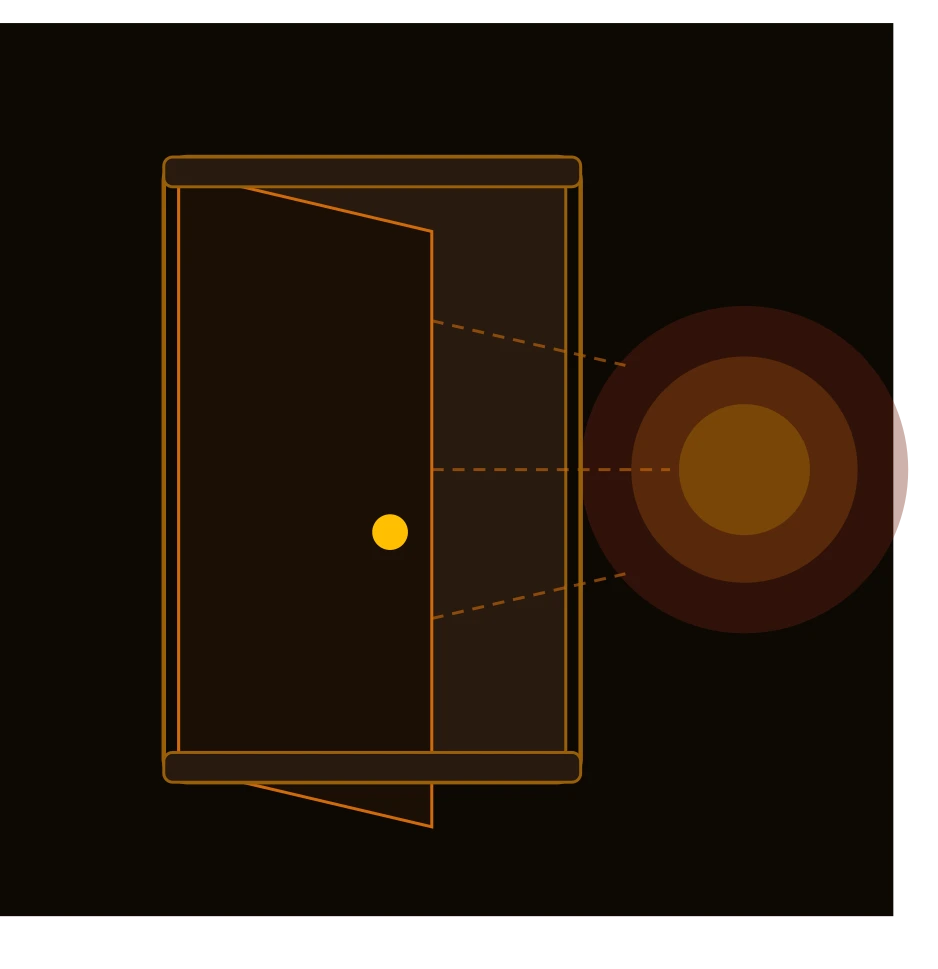
If CSPM tells you the front door is unlocked, CWPP tells you someone just walked through it. It watches what’s actually happening inside your VMs, containers, and serverless functions while they’re running – unusual process behavior, connections to known malicious IPs, privilege escalation attempts, container breakout. Runtime protection is your last line of defense when posture controls fail or get bypassed.
For Indian enterprises specifically: CWPP runtime telemetry is what gives you the forensic timeline CERT-In breach reporting requires. Not just what was misconfigured – but what actually happened during the incident, in sequence.
Where teams go wrong: Deploying CWPP agents without connecting their findings to CSPM posture data. A runtime alert about suspicious container activity becomes genuinely actionable only when you can immediately see that the container is running with excessive privileges and using an IAM role that hasn’t been reviewed in six months. In isolation, it’s just noise.
Layer 3 – Identity and Entitlement Governance (CIEM)
Your infrastructure can be perfectly configured and still get compromised through a single over-privileged credential. CIEM maps who – users, service accounts, roles – has access to what, flags permissions that violate least privilege, and surfaces dormant accounts that are technically still live. Even if an attacker gets in, CIEM ensures their blast radius is contained by what they’re actually allowed to touch.
For Indian enterprises specifically: DPDP Act’s data access accountability requirements mean you need auditable proof of who accessed what data and why. CIEM provides that identity-to-resource access mapping.
Where teams go wrong: Implementing CIEM as a standalone identity audit tool. An overprivileged role in isolation is a finding. An overprivileged role attached to a misconfigured, publicly accessible resource is a risk multiplier. Only integrated CNAPP components surface that combination automatically.
Layer 4 – Kubernetes Security Posture (KSPM)
Kubernetes has its own configuration language, its own RBAC model, and its own attack surface. Generic CSPM tools miss Kubernetes-native risks – containers running as root, overly permissive RBAC bindings, exposed API servers, unencrypted secrets. KSPM is purpose-built for K8s environments where those risks live.
For Indian enterprises specifically: Indian SaaS companies and GCCs running microservices on Kubernetes need KSPM to meet the “secure development lifecycle” requirements in RBI’s IT governance circular. Securing containerized workloads isn’t discretionary for regulated industries.
Where teams go wrong: Assuming CWPP’s container scanning covers this. CWPP scans container images for vulnerabilities. KSPM audits how those containers are deployed and configured in production. You need both, doing different things.

Layer 5 – Infrastructure-as-Code Security
This is shift-left where it actually matters. Catching a misconfiguration in a Terraform template before it deploys costs minutes and zero incident response effort. Catching it in production after it’s been live and exposed for three weeks costs significantly more of both. IaC security gates ensure compliance is automated into the pipeline rather than bolted on afterward.
For Indian enterprises specifically: DevOps teams in Indian IT/ITeS and product companies push infrastructure changes dozens of times per day. At that velocity, manual compliance review doesn’t scale. IaC security is how you keep up.
Where teams go wrong: Running IaC scans as a disconnected CI/CD check with no feedback loop into CSPM. If your IaC scanner flags a policy violation but the deployment happens anyway – because it’s a warning, not a hard gate – your CSPM should detect the resulting production drift and correlate it back to the exact IaC commit. That closed loop is integration. Without it, you have two tools that don’t know about each other.
Layer 6 – API Security
Modern cloud applications are API-first. Your mobile app, your partner integrations, your internal service mesh – all of it runs on APIs. If your API layer isn’t secured, every other control becomes bypassable. And a WAF doesn’t solve this – WAFs protect HTTP traffic. API security requires understanding API-specific attack patterns like broken object-level authorization that WAFs are architecturally blind to.
For Indian enterprises specifically: Indian fintech, e-commerce, and SaaS companies expose APIs to third-party partners and aggregators. DPDP Act compliance requires knowing what data your APIs are actually returning and to whom. API security components provide that visibility.
Where teams go wrong: Treating API security as a WAF configuration problem and moving on. Shadow APIs – undocumented endpoints that accumulate over time – don’t show up in WAF rules. You can’t protect what you don’t know exists.

Layer 7 – Data Security Posture Management (DSPM)
You can get layers one through six right and still have sensitive customer data sitting unencrypted in an S3 bucket in a non-compliant region. DSPM operates at the data layer itself – classifying what’s in your storage, mapping who accessed it, correlating that access with CIEM entitlements to catch over-access patterns. “Check for unencrypted S3 buckets” is an infrastructure check. DSPM is a data governance check. They’re not the same thing.
For Indian enterprises specifically: DPDP Act’s cross-border data transfer provisions and data localization expectations mean you need to know where your sensitive data physically resides and who can reach it. DSPM provides that data-centric visibility – not inferred from infrastructure configuration, but mapped directly from the data layer.
Where teams go wrong: Assuming CSPM’s bucket encryption policies cover data security. DSPM goes further: it classifies what’s actually in that bucket, maps who accessed it, and surfaces over-access patterns by correlating with CIEM entitlements. One tells you the container is locked. The other tells you what’s inside and who has a copy of the key.
Where Ion Fits in the Framework
Platforms like Cy5’s ion were architected with this seven-layer model as the design principle, not as a feature checklist but as an operational integration system. Ion’s architecture ensures that a misconfiguration detected by CSPM automatically queries CWPP for runtime exploitation evidence, checks CIEM for entitlement risk, and correlates with IaC security to identify the root commit – all in a single alert timeline.
For Indian enterprises managing multi-cloud environments under RBI, SEBI, and DPDP obligations simultaneously, this isn’t a convenience feature. It’s the architecture that makes continuous compliance operationally feasible without doubling your security team headcount.