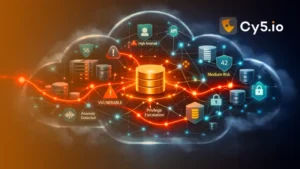
Consider a scenario where your infrastructure-as-code passes the pre-deployment security scan. The container image is clean at build time, and your Kubernetes cluster deploys without a single policy violation. Yet six weeks later, a threat actor walks in through an IAM role that was assigned during a post-deployment configuration change, one your tool stack had no visibility into, because your security coverage ended at deployment and only resumed at the next scheduled scan.
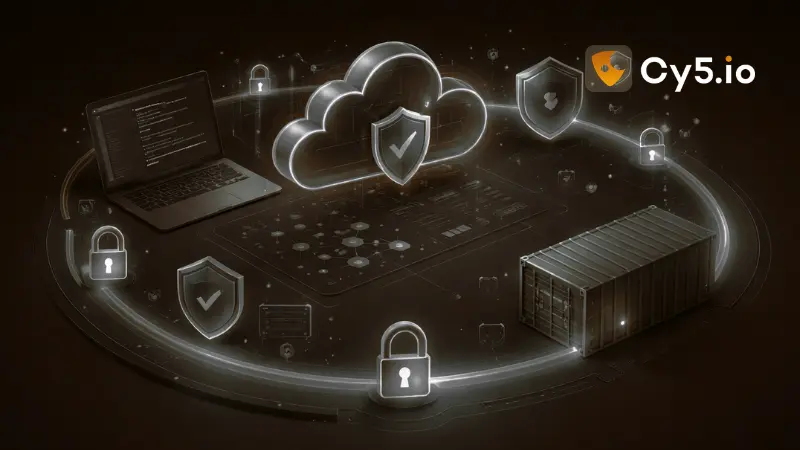
This is the CNAPP security lifecycle gap. Not a missing tool. A missing architectural continuity between the development phase, where risk is created, and the runtime environment, where risk is exploited. Most cloud security stacks protect layers. A genuine CNAPP security lifecycle protects the journey, from the first line of IaC through production runtime, continuously and without the coverage gaps that attackers navigate by default.
The DPDP Act 2023 and CERT-In’s 6-hour reporting mandate have compressed India’s acceptable breach detection window to a standard that lifecycle gaps structurally cannot meet. The question is no longer whether you need end-to-end coverage. It is whether your architecture delivers it.
In This Guide, You Will Learn-
- Why the CNAPP security lifecycle is architecturally different from point-tool cloud security, and what that gap costs in practice
- The 4-Phase CNAPP Lifecycle Model: a named framework for evaluating end-to-end cloud security coverage
- Two Indian enterprise scenarios where lifecycle gaps created avoidable compliance and breach risk
- Four strategic recommendations for security leaders ready to move from fragmented to unified lifecycle security
Cloud Security Stacks Are Wide. The CNAPP Security Lifecycle Exposes Where They Are Thin.
The average enterprise cloud security stack covers posture management, vulnerability scanning, and runtime protection, each in a separate tool, each with a separate alert queue, and none with awareness of what the others see. The IBM Cost of a Data Breach Report 2025 found that 82% of breaches involved cloud-stored data, yet the mean time to identify those breaches remained at 204 days. The tools were present. The lifecycle continuity was not.
The specific failure is temporal as security tools evaluate cloud environments at the moment they are configured or on a scheduled scan cycle. As a matter of fact these cloud environments change continuously. A deployment at 11 PM, a permission modification at 2 AM, a new service account created by a CI/CD pipeline at 6 AM. There is tremendous possibility that each event can introduce a risk that falls between scan intervals. The biggest catch is that your tool stack might not find it unless scanned and that too multiple alerts in different tools. Indian enterprises face this compounded by a 30,000-person cloud security talent gap documented by DSCI in 2023, meaning the manual correlation that might catch these blind spots simply does not happen.
Did You Know?
Gartner projects that by 2025, organizations deploying unified CNAPP architectures will reduce security incidents by 45% compared to those maintaining point-solution stacks, not because point tools are inadequate individually, but because the lifecycle gaps between them are where most breaches originate.
The bridge from fragmented to continuous is not adding more tools at each lifecycle phase. It is replacing phase-specific tools with a platform that maintains security context across the entire cloud application lifecycle, from code commit through runtime operation.
Do Give it a Read: Security Data Lake vs SIEM: When to Split Ingest and Analytics
Shift-Left Is Not Enough. Most Security Teams Have the Wrong Half of the Lifecycle.
Most DevSecOps programs are built around shift-left security: scan code early, catch vulnerabilities before deployment, keep security out of the critical path. It is good advice, and it is incomplete in a way that matters. Shift-left addresses the risk creation phase. It has no opinion on what happens when a clean deployment lands in a misconfigured environment, when a service account accumulates permissions post-deployment, or when a runtime container’s network behavior deviates from its expected pattern six weeks after a clean launch.
Most security teams believe that securing the pipeline secures the environment. Here is what that assumption costs: every runtime risk that originates from post-deployment infrastructure changes, permission drift, configuration modification, environment misconfiguration, is invisible to a shift-left-only architecture. MITRE ATT&CK for Cloud documents that 67% of successful cloud breaches involved post-deployment techniques, not deployment-phase vulnerabilities.
“Shift-left secures the code you deploy. The CNAPP security lifecycle secures the environment it runs in, which changes every day after deployment.”
The 4-Phase CNAPP Security Lifecycle Model
Evaluating whether your cloud security architecture delivers genuine lifecycle coverage. or phase-specific protection with gaps between, requires a structured model. The 4-Phase CNAPP Security Lifecycle Model maps the four stages every cloud application passes through and the specific security capability each stage requires.
The 4-Phase CNAPP Security Lifecycle Model
- IaC templates
- Container images
- App dependencies
- Network policies
- IAM role config
- Workload baseline
- Workload behaviour
- Config drift signals
- Identity activity
- CERT-In controls
- DPDP / RBI / SEBI
- ISO 27001 / CIS
Phase 1: Build- Shift-Left Security in the Development Pipeline
IaC templates, container images, and application dependencies are scanned before deployment. Security findings are surfaced in the developer’s IDE and CI/CD pipeline with specific remediation guidance.
What good looks like: a Terraform template that would create a public S3 bucket is flagged before the pull request merges, not after it reaches production.
Phase 2: Deploy- Configuration and Posture Validation at Launch
Every deployment triggers an immediate posture evaluation: are network policies correctly configured, are IAM roles scoped appropriately, does the deployed workload match the security-approved baseline?
What good looks like: a new EKS cluster deployment triggers automatic validation against CIS Kubernetes Benchmark controls within seconds of creation, not at the next scheduled CSPM scan.
Phase 3: Run- Continuous Runtime Protection and Behavioral Monitoring
Post-deployment, the CNAPP platform continuously monitors workload behavior, configuration drift, identity permission changes, and network activity. Runtime anomalies are correlated with the deployment-phase context that created the underlying condition. What good looks like: an unusual API call pattern from a service account triggers an alert enriched with the deployment history showing when that service account’s permissions were last modified and by which pipeline.
Phase 4: Govern- Continuous Compliance and Risk Lifecycle Management
Compliance posture is evaluated continuously against regulatory frameworks, CERT-In guidelines, DPDP Act controls, RBI IT Governance requirements, with automated report generation that maps security findings to specific control obligations.
What good looks like: a BFSI security team produces its RBI compliance evidence report in four hours rather than four weeks, because the platform has been tracking control posture continuously, not retrospectively.
Must Read: CNAPP Correlation Engine: How It Eliminates Cloud Alert Fatigue and Surfaces Real Attack Paths
CNAPP Security Lifecycle Gaps in Indian Enterprise Environments
Scenario 1: The NBFC That Discovered Its Compliance Gap During an RBI Inspection
A Mumbai-based NBFC running its lending platform on Azure had invested in pipeline security scanning and a scheduled CSPM tool. Both were functioning correctly at their respective lifecycle phases. During an RBI IT governance inspection, auditors requested evidence of continuous monitoring, specifically, the ability to demonstrate real-time awareness of configuration changes to systems processing financial transactions.
The NBFC’s CSPM tool ran on a 24-hour cycle. The pipeline scanner had no visibility into post-deployment changes. Between those two tools was a Phase 2–3 lifecycle gap: every configuration change made between scans was unmonitored and unlogged for compliance purposes. The inspection flagged this as a continuous monitoring deficiency. Remediation required deploying an event-driven posture monitoring layer, a four-month project that could have been avoided with lifecycle-aware architecture from the outset. The compliance cost: a remediation program estimated at ₹60 lakhs, against an annual CNAPP platform cost of ₹18 lakhs.
Scenario 2: The SaaS Startup Whose Clean Deployment Became a Runtime Risk
A Bengaluru-based Series B SaaS company passed every pre-deployment security check for a new microservices release. Container images were scanned, IaC templates were validated, and the deployment proceeded without a single pipeline security alert.
Three weeks post-deployment, a developer manually modified a Kubernetes network policy to unblock an integration test, and forgot to revert it. The policy change opened lateral movement paths between microservices that the original deployment had explicitly restricted. No runtime monitoring tool was watching for policy drift. The change sat undetected for 11 weeks before surfacing in a penetration test. A Phase 3 runtime monitoring capability, watching for policy drift against the deployment baseline, would have flagged this within seconds of the change.
Four Recommendations for Security Leaders Building Lifecycle-Complete Cloud Security
1. Map Your Current Tools to the 4-Phase Model, Find Your Gaps Before an Attacker Does
Assign every current security tool to one of the four phases: Build, Deploy, Run, Govern. Then identify which phases have no coverage and which phase transitions have no shared context. This mapping exercise, which typically takes one day with the right stakeholders, produces a gap analysis that is more operationally honest than any vendor briefing. The gaps between phases, not the phases themselves, are where most cloud breaches originate.
You have done this correctly when: you can draw a line from every cloud infrastructure change event to the security tool that evaluates it in real time, with no gaps between pipeline, deployment, and runtime coverage.
2. Replace Scheduled Scanning with Event-Driven Architecture, CERT-In Requires It
CERT-In’s 6-hour breach reporting mandate is structurally incompatible with 24-hour scan cycles. Every Indian enterprise subject to CERT-In obligations should treat event-driven cloud security architecture, where every configuration change triggers immediate evaluation, as a compliance requirement, not a platform preference. Organizations still operating on scheduled scans have a regulatory gap that their next audit will expose.
3. Connect Pipeline and Runtime Security Under a Shared Risk Model
Unified cloud security platform deployments that share context between pipeline findings and runtime monitoring can reduce mean time to detect post-deployment risks by a documented 97% in enterprise environments. The integration point is the shared asset identifier: when a runtime anomaly references the same resource ID as the pipeline finding that created the vulnerable condition, the investigation that would take days takes minutes.
4. Build Your Compliance Reporting from Continuous Posture, Not Retrospective Snapshots
RBI, SEBI, and DPDP Act compliance evidence collected from a continuous posture platform is operationally stronger than evidence assembled from periodic audit exports. Continuous evidence demonstrates that controls were active throughout the assessment period, not that they were active at the moment of assessment. For Indian BFSI organizations facing increasingly scrutinous RBI inspections, this distinction is becoming a material audit differentiator.
What Independent Research and Standards Bodies Say About Lifecycle Cloud Security
Gartner’s 2023 CNAPP research found that organizations with unified lifecycle cloud security architectures detected and contained breaches 45% more effectively than those using equivalent point-solution coverage — attributing the improvement specifically to the elimination of inter-phase visibility gaps, not to superior capability within any individual phase.
MITRE ATT&CK for Cloud documents 13 attack tactics targeting cloud environments, with post-deployment techniques, privilege escalation, lateral movement, collection, exfiltration, accounting for the majority of documented breach sequences. NIST CSF 2.0’s updated cloud security guidance explicitly requires integrated detection across development, deployment, and runtime phases, a direct alignment with the 4-Phase CNAPP Security Lifecycle Model.
Retention
The Lifecycle Gap Is Where the Breach Lives
Every cloud security tool you have is protecting something real. The problem is the space between them, the post-deployment configuration change that no pipeline scanner sees, the runtime permission drift that no scheduled CSPM catches, the compliance gap that an RBI inspector documents before your team does.
The CNAPP security lifecycle closes that space. Not by adding more tools at each phase, but by maintaining security context continuously across all four phases, Build, Deploy, Run, Govern, so that the risk created in development is visible in production, and the runtime anomaly is understood in the context of the deployment that created it.
The single most important next step is the gap mapping exercise: assign every current tool to a lifecycle phase, find the unmonitored transitions, and build from there. If you want a second set of eyes on what you find, that conversation is available.
FAQs: Security and DevSecOps Leaders Ask About the CNAPP Security Lifecycle
The CNAPP security lifecycle is the end-to-end protection model that a Cloud-Native Application Protection Platform provides across the full cloud application journey, from development pipeline security (IaC scanning, container image analysis) through deployment posture validation, runtime workload protection, and continuous compliance governance. Unlike point tools that protect individual phases, the CNAPP lifecycle maintains shared security context across all phases, eliminating the coverage gaps between them where most cloud breaches originate.
Shift-left security addresses the Build phase, catching vulnerabilities in code and configuration before deployment. The CNAPP security lifecycle extends protection across all four phases: Build, Deploy, Run, and Govern. Shift-left secures what you deploy. The CNAPP lifecycle also secures the environment it runs in, which changes continuously after deployment through configuration drift, permission modifications, and infrastructure changes that pipeline scanning has no visibility into.
The CNAPP security lifecycle comprises four phases:
1. Build- security scanning of IaC templates, container images, and application dependencies in the development pipeline;
2. Deploy- posture validation at the moment of deployment against security baselines and compliance controls;
3. Run- continuous runtime workload monitoring, behavioral anomaly detection, and configuration drift tracking;
4. Govern- continuous compliance posture management mapped to regulatory frameworks such as CERT-In, RBI IT Governance, DPDP Act, and ISO 27001.
Most cloud security stacks were assembled incrementally, a CSPM tool added after a compliance audit, a pipeline scanner after a vulnerability incident, a runtime agent after a breach. Each tool was a rational response to a specific problem but was designed without awareness of the others. The result is phase-specific protection with unmonitored transitions between phases, particularly the Deploy-to-Run gap, where post-deployment configuration changes create risk that neither pipeline scanners nor scheduled CSPM tools detect in time.
CERT-In’s 6-hour breach reporting mandate requires real-time detection capability that scheduled-scan architectures cannot provide. A CNAPP platform with event-driven architecture evaluates every cloud configuration change the moment it occurs, eliminating the detection blind spots between scan intervals. For Indian enterprises, this is not a platform preference: it is a compliance architecture requirement. Organizations still relying on 24-hour CSPM scan cycles have a structural CERT-In compliance gap that their next inspection will surface.
Indian BFSI enterprises need CNAPP lifecycle coverage that simultaneously satisfies RBI IT Governance continuous monitoring requirements, SEBI cybersecurity framework obligations, and DPDP Act data protection controls, mapped to the same cloud security findings from a single platform. The most effective approach is a unified CNAPP platform with prebuilt India regulatory compliance packs, event-driven architecture for real-time posture assessment, and automated compliance report generation that reduces audit preparation from weeks to hours.
CNAPP shift-left security integrates with CI/CD pipelines through IaC scanning plugins for Terraform, CloudFormation, and Pulumi; container image scanning at build time against CVE databases; and policy-as-code gates that block deployments creating security policy violations. The critical CNAPP differentiator is that pipeline findings are shared with the runtime monitoring layer, so a vulnerability detected in the pipeline can be correlated with the runtime context of the environment it is deploying into.
Indian enterprises should evaluate CNAPP lifecycle platforms on four criteria:
Regulatory coverage- native compliance packs for CERT-In, DPDP Act, RBI, and SEBI;
Ingestion architecture- event-driven versus scheduled polling, which determines compliance with CERT-In’s 6-hour reporting window;
Lifecycle continuity- shared risk context between pipeline, deployment, and runtime phases rather than separate dashboards; and India deployment experience.
Cy5’s ion platform was designed with Indian regulatory requirements as first-class capabilities, not retrofit additions.
CNAPP runtime protection is the Phase 3 capability that monitors cloud workloads continuously after deployment, detecting behavioral anomalies in container processes, API call patterns, network communications, and identity activity that deviate from expected baselines. Runtime protection differs from vulnerability scanning in that it identifies threats that are actively occurring in the environment, not just conditions that could be exploited. It is the lifecycle phase most frequently missing from DevSecOps programs that have invested heavily in shift-left controls.
The ROI case for Indian enterprises has three components. Direct cost reduction: consolidating 4–6 point tools to a single CNAPP platform typically eliminates 40–60% of combined license cost. Operational efficiency: documented outcomes from Indian enterprise deployments include 85–96% alert noise reduction, saving an estimated 3 person-months annually in security operations overhead, material in an environment with a 30,000-person cloud security talent gap. Compliance cost avoidance: lifecycle gaps discovered during RBI or CERT-In inspections require remediation programs that typically cost 3–5 times the annual cost of the platform that would have prevented them.
Key Takeaways
- The CNAPP security lifecycle is a 4-phase model: Build, Deploy, Run, Govern; that maintains continuous security context across the entire cloud application journey.
- Shift-left security addresses Phase 1 only. Post-deployment configuration drift, runtime permission changes, and behavioral anomalies require Phases 2, 3, and 4.
- CERT-In’s 6-hour reporting mandate structurally requires event-driven lifecycle architecture — scheduled scanning cannot satisfy a real-time detection standard.
- The gap between lifecycle phases, not the phases themselves, is where most cloud breaches originate. Map your tools to the 4-phase model to find yours.
- The ROI of unified CNAPP lifecycle security includes license consolidation, 85–96% alert noise reduction, and compliance remediation cost avoidance.
About the Author
Vikram Mehta is Founder & CEO of Cy5 and a 20-year practitioner across offensive security, DevOps, and cloud-native platform engineering. Former CISO at MakeMyTrip Group (2012–2021); three-time DSCI Excellence Award recipient. Founded Cy5 to build the lifecycle-aware cloud security platform he needed and could not find.