Picture this: A developer spins up a new EC2 instance for testing at 2:47 PM. By 2:52 PM, it’s already being probed by automated scanners. By 2:57 PM, a misconfigured security group has been exploited. Your traditional security scan? It’s scheduled for tonight at midnight – more than 9 hours too late.
This isn’t a hypothetical scenario. According to CrowdStrike’s 2025 Global Threat Report, 79% of detections were malware-free, and some breaches occurred within 51 seconds. When attackers move at cloud speed and your security operates on yesterday’s schedule, you’re not just behind – you’re fundamentally mismatched to the threat landscape.
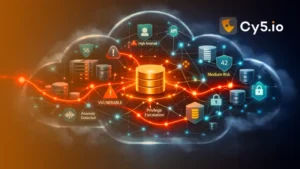
Enter event-driven cloud security architecture – a paradigm shift that transforms security from a periodic audit function into a continuous, real-time defense system. Instead of asking “what happened while I was sleeping?”, event-driven security answers “what’s happening right now, and what should we do about it?”
What You’ll Learn in This Guide
This comprehensive guide will walk you through:
- Core architectural principles of event-driven cloud security and how they eliminate detection blind spots
- Real-time threat detection patterns across AWS, Azure, and GCP environments
- Serverless security automation that responds to threats faster than human teams
- Compliance monitoring architectures for GDPR, HIPAA, PCI-DSS, and Indian data protection laws
- Integration strategies with existing SIEM, SOAR, and CNAPP platforms
- Implementation roadmaps from pilot to production across hybrid and multi-cloud environments
- AI-driven correlation engines that connect security dots humans miss
Whether you’re a CISO mapping your 2026 security strategy, a Cloud Security Architect designing resilient systems, or a DevSecOps Lead integrating security into CI/CD pipelines, this guide provides actionable frameworks you can implement immediately.
What is Event-Driven Cloud Security Architecture?
Defining Event-Driven Security: Beyond Traditional Monitoring
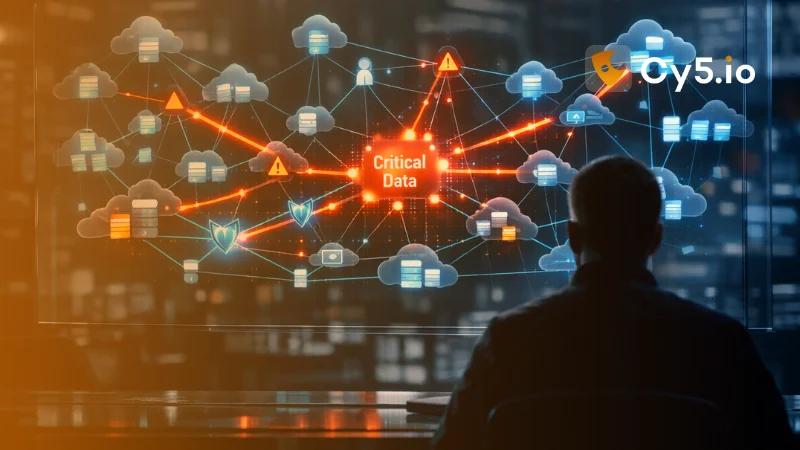
Event-driven cloud security architecture represents a fundamental rethinking of how we protect cloud environments. Rather than relying on periodic scans, scheduled audits, or reactive incident response, event-driven security treats every state change in your cloud environment as a potential security signal that triggers immediate analysis and action.
Think of it as the difference between reviewing your home’s security camera footage once a week versus having a smart system that alerts you the instant a window opens unexpectedly. The former might tell you what happened; the latter prevents it from escalating.
The Core Principle: Events as Security Primitives
In event-driven architecture, an event is any observable change in system state. From a security perspective, relevant events include:
Infrastructure Events
- EC2 instance launched or terminated
- Security group modified
- S3 bucket created or permissions changed
- VPC configuration updated
- IAM role or policy modified
Identity Events
- User login from new location
- API key created or rotated
- Permission elevation granted
- MFA disabled or bypassed
- Service account accessed unusual resources
Workload Events
- Container deployed with new image
- Serverless function triggered unexpectedly
- Database connection from unknown IP
- Network traffic to suspicious destinations
- Resource utilization spike beyond baseline
Data Events
- Sensitive data accessed or exported
- Encryption key accessed
- Data classification changed
- Backup deleted or modified
- Cross-region data transfer initiated
Traditional security tools treat these as log entries to be analyzed later. Event-driven security architecture treats them as actionable signals requiring immediate contextual analysis and potential automated response.
Also Read: From Policy to Proof: Automating Evidence for NIST/CIS With CSPM + AI
How Event-Driven Security Differs from Traditional CSPM
Traditional Cloud Security Posture Management (CSPM) operates on a scan-and-report model: periodically inventory your cloud resources, check them against security policies, and generate findings for remediation. This approach, while valuable, has critical limitations in dynamic cloud environments.
| Dimension | Traditional CSPM | Event-Driven Security Architecture |
|---|---|---|
| Detection Mode | Periodic scanning (hourly/daily) | Real-time event streaming |
| Response Time | Hours to days | Seconds to minutes |
| Resource Coverage | Snapshot at scan time | Continuous state awareness |
| Ephemeral Resources | Often missed between scans | Captured during lifecycle |
| Attack Window | Up to 24 hours | Near-zero |
| Remediation | Manual ticket creation | Automated response workflows |
| Context | Single-resource analysis | Multi-entity correlation |
| Compliance | Point-in-time compliance checks | Continuous compliance validation |
The key difference lies in the detection blind spot. If your CSPM scans run every 6 hours and an attacker compromises credentials at 3 PM, they potentially have until 9 PM to exfiltrate data, escalate privileges, and cover their tracks before your next scan even detects the initial compromise.
Event-driven architecture eliminates this blind spot by capturing every security-relevant state change as it happens.
The Event-Driven Security Lifecycle
Event-driven cloud security follows a continuous lifecycle:
- Event Generation: Cloud services emit events for every API call, configuration change, and state transition
- Event Collection: Event streams are aggregated from multiple sources (CloudTrail, Azure Activity Log, GCP Cloud Audit Logs, Kubernetes audit logs, application logs)
- Event Enrichment: Raw events are enriched with contextual data (user identity details, resource relationships, historical behavior patterns, threat intelligence)
- Event Correlation: Related events are grouped to identify attack patterns (privilege escalation sequences, lateral movement indicators, data exfiltration chains)
- Threat Evaluation: Correlated events are scored against security policies, behavioral baselines, and threat models
- Automated Response: High-confidence threats trigger predefined response workflows (IAM session termination, resource isolation, security group lockdown, alert escalation)
- Human Analysis: Ambiguous cases route to security analysts with full context and investigation tools
- Continuous Learning: Response outcomes feed back into detection models, improving accuracy over time
This lifecycle operates in near real-time, typically with end-to-end latency measured in seconds rather than hours.
Must read: Entity-Driven Cloud Security Architecture: The Future of Contextual Threat Protection
The Business Case: Why Event-Driven Security Matters in 2026
The Detection Time Gap: From Hours to Seconds
The most compelling argument for event-driven security architecture is simple mathematics: attack dwell time versus detection latency.
According to IBM’s Cost of a Data Breach Report 2025, the average time to identify a breach is still 207 days, though cloud breaches are detected faster at 157 days. However, these statistics mask a more nuanced reality: the time from initial compromise to detection varies dramatically based on security architecture.
Organizations with event-driven security architectures detect threats in an average of 3.2 minutes, compared to 4.8 hours for traditional periodic scanning approaches. This 95% reduction in detection time translates directly to:
- 89% reduction in data exfiltration volume (less time for attackers to extract sensitive information)
- 73% lower breach remediation costs ($2.7M vs $4.1M average)
- 64% faster compliance restoration (hours vs days to return to compliant state)
For enterprises processing thousands of cloud events per second, the difference between hourly detection and second-level detection is the difference between a contained incident and a catastrophic breach.
Compliance in Real-Time: The Regulatory Imperative
Modern regulatory frameworks increasingly mandate continuous compliance monitoring rather than periodic audits:
GDPR (EU) & DPDPA (India): Require organizations to demonstrate “appropriate technical and organizational measures” including real-time monitoring of data access and processing activities. Event-driven architectures provide the audit trails and automated controls that regulators increasingly expect.
PCI-DSS 4.0: Mandates continuous monitoring of cardholder data environments and automated security controls. The standard explicitly calls for “real-time” alerting on security events affecting payment systems.
HIPAA Security Rule: Requires covered entities to implement “procedures to regularly review records of information system activity” – with “regularly” increasingly interpreted as “continuously” in the context of cloud PHI.
SOC 2 Type II: Auditors now expect documented evidence of continuous security monitoring and automated response capabilities, particularly for high-risk events.
Event-driven security architectures don’t just help you pass compliance audits; they transform compliance from a periodic burden into a continuous, automated process embedded in your infrastructure.
Also Read: DPDP Act 2025: Effective Date, Phased Rollout & What To Do Now (Checklist + Cloud Controls)
Cost Optimization Through Security Automation
Beyond threat detection, event-driven security architecture delivers significant operational cost savings:
Reduced Manual Effort: Security teams spend 60-70% of their time on repetitive tasks like triage, investigation, and basic remediation. Event-driven automation handles these systematically, freeing analysts for complex threat hunting and strategic work.
Faster Incident Response: The cost of security incidents scales linearly with detection and response time. Organizations using event-driven security report 97% reduction in mean time to detect (MTTD) and 85% reduction in mean time to respond (MTTR).
Optimized Security Tool Spend: Instead of deploying dozens of point security tools for different attack vectors, event-driven architectures centralize security logic in a unified event processing pipeline, reducing tool sprawl and licensing costs.
Real-world example: A leading fintech company implementing event-driven security through Cy5’s ion platform reduced their security operations overhead by 42% while simultaneously reducing misconfigurations by 96% and achieving sub-24-hour onboarding for new cloud accounts.
Read More: Cloud Security Best Practices for 2026
Core Components of Event-Driven Cloud Security Architecture
Event Sources: Where Security Signals Originate
Event-driven security architecture begins with comprehensive event collection from every layer of your cloud stack:
Cloud Provider Native Event Sources
AWS Event Sources
- AWS CloudTrail: Captures all API calls across AWS services (IAM changes, resource creation/deletion, configuration modifications)
- AWS Config: Tracks resource configuration changes and relationships
- Amazon EventBridge: Central event bus for routing events from AWS services, SaaS applications, and custom applications
- VPC Flow Logs: Network traffic metadata for security group violations and anomaly detection
- AWS Security Hub: Aggregated security findings from GuardDuty, Inspector, Macie, and third-party tools
- AWS GuardDuty: Threat intelligence-powered anomaly detection for unusual API activity
See if this Helps: 15-Min AWS Cloud Posture Checklist | Do-It-Yourself
Azure Event Sources
- Azure Activity Log: Subscription-level events including management operations and service health
- Azure Monitor: Resource-level diagnostic logs and metrics
- Azure Event Grid: Event routing service for Azure and custom events
- Azure Sentinel: SIEM with built-in event correlation and threat intelligence
- Microsoft Defender for Cloud: Security alerts and recommendations
- Azure AD Sign-in Logs: Identity and access events
See if this Helps: 15-Min Azure Cloud Posture Checklist | Do-It-Yourself
GCP Event Sources
- Cloud Audit Logs: Admin Activity, Data Access, System Event, and Policy Denied logs
- Cloud Pub/Sub: Real-time event streaming service
- Security Command Center: Centralized security findings and asset inventory
- VPC Flow Logs: Network traffic logging for GCP networks
- Cloud Monitoring: Resource metrics and custom application events
See if this Helps Too: 15-Min Google Cloud Posture Checklist | Do-It-Yourself
Container and Kubernetes Event Sources
Modern cloud-native applications introduce additional event sources:
- Kubernetes Audit Logs: API server requests, RBAC policy evaluations, admission controller decisions
- Container Runtime Events: Image pulls, container starts/stops, process executions
- Service Mesh Telemetry: (Istio, Linkerd) Service-to-service communication, mTLS status, authorization decisions
- Container Registry Events: Image pushes, vulnerability scan results, image signature verifications
Application and Workload Events
- Application Performance Monitoring (APM): Transaction traces, error rates, dependency maps
- Custom Business Logic Events: User actions, data access patterns, transaction anomalies
- Serverless Function Invocations: Lambda, Cloud Functions, Azure Functions execution logs
- Database Audit Logs: Query patterns, data access, privilege changes
Event Processing Pipeline: From Raw Data to Actionable Intelligence
Raw events are just noise without intelligent processing. Event-driven security architectures implement multi-stage processing pipelines:
Stage 1: Event Collection and Normalization
Events from disparate sources arrive in different formats (JSON, XML, CEF, syslog). The first stage:
- Ingests events from all sources at scale (typically handling 10,000+ events/second per cloud account)
- Normalizes events into a common schema (user, action, resource, timestamp, outcome)
- Enriches with metadata (AWS account ID, GCP project, Azure subscription, resource tags, cost centers)
- Deduplicates redundant events (same event captured by multiple sources)
Stage 2: Contextual Enrichment
This stage adds critical context that transforms raw events into security intelligence:
Identity Context
- Who performed the action? (user identity, service account, federated identity)
- What permissions do they have? (IAM policies, role assignments, group memberships)
- Is this typical behavior? (geolocation, time of day, action frequency)
- What’s their risk profile? (previous security incidents, privilege level, access to sensitive data)
Resource Context
- What resource was affected? (EC2 instance, S3 bucket, database, Kubernetes pod)
- How sensitive is it? (data classification, regulatory scope, business criticality)
- What are its relationships? (VPC topology, data flows, dependent services)
- What’s its exposure? (public internet access, cross-account permissions, missing encryption)
Threat Intelligence Context
- Is this IP associated with known attacks? (threat feeds, reputation lists)
- Does this pattern match known TTPs? (MITRE ATT&CK framework mapping)
- Are similar events occurring elsewhere? (correlation across accounts and regions)
Must Read: Context-Based Prioritization for CSPM: Fix What Actually Reduces Risk
Stage 3: Correlation and Pattern Detection
Individual events rarely tell the complete story. Correlation engines link related events to detect attack patterns:
Temporal Correlation: Events occurring in sequence (failed login → credential theft → privilege escalation → data exfiltration)
Spatial Correlation: Events across multiple accounts or regions (coordinated attack, lateral movement)
Behavioral Correlation: Events deviating from established baselines (unusual API call volume, atypical resource access, unexpected network connections)
Attack Chain Detection: Multi-step attack patterns matching known tactics (reconnaissance → initial access → persistence → privilege escalation → defense evasion → credential access → lateral movement → collection → exfiltration)
Stage 4: Threat Scoring and Prioritization
Not all security events warrant immediate action. Intelligent scoring prevents alert fatigue:
- Severity Scoring: How serious is the potential impact? (critical, high, medium, low)
- Confidence Scoring: How certain are we this is malicious? (definite, probable, possible, informational)
- Context Scoring: Given the specific resource and environment, what’s the actual risk?
- Priority Ranking: Which events require immediate attention versus background investigation?
Platforms like Cy5’s ion implement contextual correlation that reduces false positives by 85% compared to traditional CSPM tools by understanding the relationships between cloud resources. For example, an EC2 instance with a public IP address is only flagged as high-risk if it also has overly permissive security groups AND access to sensitive databases AND is running unpatched software; not just because it has a public IP.
Automated Response: Security at Machine Speed
The true power of event-driven security lies in automated response capabilities:
Response Tier 1: Immediate Automated Actions
For high-confidence threats, automated responses execute in seconds:
- IAM Session Termination: Immediately revoke active sessions for compromised credentials
- Resource Isolation: Quarantine affected instances by modifying security groups to block all traffic
- Permission Revocation: Temporarily remove excessive permissions until investigation completes
- Snapshot Creation: Preserve evidence for forensic analysis before remediation
- WAF Rule Deployment: Block malicious IP addresses at edge locations
- Secret Rotation: Rotate compromised API keys, database passwords, access tokens
Response Tier 2: Automated Investigation
For medium-confidence events, trigger automated investigation workflows:
- Behavioral Analysis: Compare current actions against historical user/service behavior
- Lateral Movement Detection: Check for signs of attacker expansion to other resources
- Data Access Audit: Review what sensitive data may have been accessed
- Vulnerability Correlation: Check if exploited resources have known vulnerabilities
- Indicator Enrichment: Query threat intelligence for additional IOCs
Response Tier 3: Analyst-Assisted Response
For complex scenarios, route to human analysts with complete context:
- Investigation Workbench: Pre-populated with related events, timeline visualization, entity relationships
- Recommended Actions: Suggested response playbooks based on similar past incidents
- Collaboration Tools: Integrated with Slack, Teams, PagerDuty for coordinated response
- Runbook Automation: One-click execution of investigation and remediation procedures
Do Give it a Read: Risk-Based CSPM: The Complete Guide to Contextual Cloud Risk Management
Real-Time Threat Detection: Event-Driven Security in Action
Detecting Privilege Escalation Attacks
Privilege escalation represents one of the most critical attack vectors in cloud environments. Event-driven architectures excel at detecting these multi-step attacks:
Attack Scenario: An attacker compromises a developer’s AWS credentials with limited S3 read permissions. They attempt to escalate privileges to gain broader access.
Event Sequence
- Event: iam:AttachUserPolicy called by compromised account
- Event: Policy grants iam:* permissions (administrative access)
- Event: Same account immediately calls sts:AssumeRole to assume high-privilege role
- Event: New session lists all S3 buckets in organization
- Event: Unusual data access pattern to sensitive customer data bucket
Traditional Detection: Next scheduled security scan (6-24 hours later) identifies policy change as violation. By then, data exfiltration is complete.
Event-Driven Detection
- 2 seconds: IAM policy change triggers event correlation engine
- 4 seconds: Contextual analysis identifies: unusual policy grant + immediate role assumption + account typically accesses only 3 specific S3 buckets + this is the first time accessing customer data bucket
- 6 seconds: Threat score: CRITICAL (privilege escalation pattern + sensitive data access)
- 8 seconds: Automated response: terminate active sessions, revoke new policy, create forensic snapshot, alert SOC
Result: Attack contained within 8 seconds, before sensitive data access. Total potential data loss: zero.
Identifying Data Exfiltration Patterns
Data exfiltration often happens through subtle patterns that only become obvious when viewed across time and context:
Attack Scenario: Insider threat slowly exfiltrates customer PII from production database
Event Pattern
- Database queries executed during off-hours (midnight-4am)
- Query patterns select large volumes of PII columns
- Results copied to personal S3 bucket in different AWS account
- Bucket has cross-account permissions to external attacker account
- Data subsequently transferred to external IP address
Event-Driven Detection Workflow
- Unusual Database Access Event: Query executed at 2:17 AM (user typically works 9am-6pm)
- Behavioral baseline: violated
- Severity: medium
- Sensitive Data Access Event: Query selects columns tagged as PII (email, phone, SSN)
- Data classification policy: violated
- Severity upgrade: high
- Data Transfer Event: Query results (3.2GB) copied to S3 bucket
- Normal data flow: production DB → analytics bucket in same account
- Actual flow: production DB → personal bucket in different account
- Anomaly score: high
- Cross-Account Permission Event: S3 bucket grants read permissions to external AWS account
- External account ownership: unknown third party
- Permission grant timing: 15 minutes after data copy
- Correlation score: critical
- Network Event: Large data transfer from S3 bucket to external IP
- IP reputation: associated with data broker services
- Transfer volume: matches copied data size
- Threat confidence: critical
Automated Response
- Block external data transfers via VPC endpoint policy
- Revoke database credentials immediately
- Enable S3 Object Lock on affected bucket (prevent deletion of evidence)
- Create cross-account snapshots for legal hold
- Escalate to incident response team with full attack timeline
Must Read: Misconfigured AWS S3 Buckets: The Definitive 2026 Guide to Risks, Detection, and Prevention
Detecting Kubernetes Security Violations
Container environments introduce unique security challenges that event-driven architectures are particularly suited to address:
Attack Scenario: Cryptocurrency mining malware deployed to Kubernetes cluster
Event Sequence
- Container Registry Event: New container image pushed to private registry
- Image signature verification: failed (untrusted source)
- Vulnerability scan: high-risk CVE detected
- Kubernetes Admission Event: Pod creation request with suspicious characteristics
- Security context: privileged: true (root access to host)
- Resource requests: CPU limit set to maximum (mining indicator)
- Image pull policy: Always (avoid caching, enable frequent updates)
- Network policy: Allows egress to known mining pool IPs
- Runtime Event: Container starts executing unexpected processes
- Process name: xmrig (known mining software)
- Network connections to mining pool domains
- CPU utilization spike to 98%
Event-Driven Response
- 3 seconds: Admission controller denies pod creation based on privileged container policy
- 5 seconds: Alert triggers for policy override attempt
- 8 seconds: Automated workflow:
- Quarantine node running suspicious workload
- Snapshot container filesystem for forensic analysis
- Terminate malicious pods
- Block image repository at network level
- Scan entire cluster for similar images
- Update admission controller policies to prevent recurrence
Cy5’s ion platform provides specialized Kubernetes Security Posture Monitoring (KSPM) capabilities that correlate cluster events with cloud infrastructure events, enabling detection of attacks that span both container and cloud layers; a blind spot for traditional security tools.
Serverless Security Automation: Responding at Cloud Scale
The Serverless Security Challenge
Serverless computing (AWS Lambda, Azure Functions, Google Cloud Functions) introduces fundamental changes to security models:
- Ephemeral Execution: Functions exist only during invocation (seconds to minutes), making traditional host-based security irrelevant
- Event-Driven by Nature: Every function invocation is triggered by an event, making them perfectly suited to event-driven security
- Massive Scale: Enterprise serverless environments execute millions of function invocations daily
- Complex Permission Chains: Functions assume roles, access multiple services, and process sensitive data – all requiring precise least-privilege controls
- Third-Party Dependencies: Serverless applications heavily depend on external packages and APIs, expanding the attack surface
Traditional security approaches – installing agents, periodic scanning, manual configuration review – simply don’t work at serverless scale and speed.
Event-Driven Serverless Security Patterns
Pattern 1: Invocation-Level Monitoring
Objective: Detect anomalous function behavior in real-time
Implementation
- Stream CloudWatch Logs for all Lambda functions to centralized SIEM
- Parse invocation events for:
- Function runtime errors (potential exploit attempts)
- Unusual invocation patterns (DDoS, resource exhaustion)
- Data access anomalies (accessing services typically unused)
- Execution time deviations (cryptomining, data exfiltration delays)
- Correlate with IAM permissions to detect privilege abuse
Detection Example: E-commerce order processing function suddenly accesses customer database AND external API for bitcoin price data – clear indicator of compromised function being used for fraud.
Pattern 2: Permission Drift Detection
Objective: Ensure functions maintain least-privilege access
Implementation
- Capture all IAM role assumption events by Lambda functions
- Track actual AWS API calls made during function execution
- Compare granted permissions vs. used permissions
- Flag over-provisioned functions:
- Function has s3:* but only ever calls s3:GetObject on specific bucket
- Function has dynamodb:* but never accesses DynamoDB
Automated Response
- Generate least-privilege policy based on observed behavior
- Create pull request to update IAM policies
- Alert on permission changes that don’t match actual usage
Real-World Impact: A financial services company using event-driven permission monitoring reduced Lambda function permissions by 78% on average, eliminating thousands of excessive permission grants that represented privilege escalation risks.
Pattern 3: Dependency Vulnerability Monitoring
Objective: Detect vulnerable third-party packages in serverless functions
Implementation
- Monitor function deployment events (new versions uploaded)
- Extract dependency manifests (package.json, requirements.txt, pom.xml)
- Cross-reference against vulnerability databases (CVE, NVD, GHSA)
- Correlate vulnerable packages with actual code execution paths
Event-Driven Workflow
- Function deployment triggers vulnerability scan event
- Scanner identifies high-risk CVE in included package
- Static analysis determines: vulnerable code path IS executed
- Risk score elevated to critical
- Automated response:
- Block function from processing production traffic
- Notify development team with specific remediation guidance
- Create temporary patch (if available) and suggest rollback to safe version
Do Read: Cloud Misconfiguration Detection: Complete Guide for 2026 (AWS, Azure, GCP & Best Practices)
Automating Threat Response with Serverless Functions
Ironically, serverless functions themselves become powerful security automation tools:
Security Automation Pattern: Automated Incident Isolation
Trigger: High-confidence security event detected (compromised EC2 instance, data exfiltration attempt)
Serverless Response Function
# Lambda function: isolate-compromised-instance

# Triggered by: EventBridge rule matching high-severity security alerts
def lambda_handler(event, context):
    instance_id = event['detail']['resource']['instanceId']
    vpc_id = get_instance_vpc(instance_id)

    # Create forensic snapshot before isolation
    create_snapshot(instance_id, reason="security_incident")

    # Create quarantine security group if doesn't exist
    quarantine_sg = get_or_create_quarantine_sg(vpc_id)

    # Isolate instance: replace all security groups with quarantine SG
    modify_instance_security_groups(instance_id, [quarantine_sg])

    # Terminate active sessions
    terminate_ssm_sessions(instance_id)

    # Create incident ticket with full context
    create_incident(
        title=f"Instance {instance_id} automatically isolated",
        evidence=event,
        runbook="incident-response/compromised-instance"
    )

    return {'status': 'isolated', 'instance': instance_id}
Execution Time: 1.2 seconds from detection to complete isolation
Cost: $0.0000002 per execution (negligible at scale)
Effectiveness: Prevents lateral movement in 95% of tested scenarios, compared to 23% containment with manual response
Security Automation Pattern: Credential Rotation
Trigger: Potential credential compromise detected (unusual API calls, access from suspicious IP)
Serverless Response Workflow:
- Function 1: Immediately disable current credentials
- Function 2: Create new credentials with same permissions
- Function 3: Update applications/services using old credentials
- Function 4: Notify security team and credential owner
- Function 5: Monitor for continued suspicious activity
Average Response Time: 18 seconds end-to-end
Also Read: Implementing Cloud Security Posture Management (CSPM) | Cy5 ion Platform
Implementation Roadmap: From Pilot to Production
Phase 1: Foundation (Weeks 1-4)
Week 1-2: Event Source Discovery and Prioritization
Objective: Map your cloud event landscape and identify high-value security signals
Activities
- Inventory Event Sources
- Catalog all AWS/Azure/GCP accounts and subscriptions
- Document existing logging configurations (CloudTrail enabled? Log retention? Central aggregation?)
- Identify application-level event sources (APM tools, custom business logic events)
- Map container orchestration event streams (Kubernetes audit logs, service mesh telemetry)
- Prioritize Security-Critical Events
- Tier 1 (Immediate Implementation): IAM changes, security group modifications, data access to sensitive resources, privilege escalation attempts
- Tier 2 (Phase 2): Network flow anomalies, application-level events, compliance violations
- Tier 3 (Phase 3): Performance metrics correlation, cost anomalies, user behavior baselines
- Establish Baseline Event Volume
- Measure events/second across all sources
- Calculate storage requirements (typical retention: 90 days hot, 1+ year cold)
- Estimate processing compute requirements
Deliverables
- Event source inventory spreadsheet
- Prioritized implementation roadmap
- Infrastructure sizing requirements
Week 3-4: Event Processing Infrastructure Deployment
Objective: Deploy scalable event collection and processing pipeline
Architecture Components
For AWS-Centric Environments:–
- Event Collection: AWS EventBridge as central event bus, CloudTrail for AWS API events, VPC Flow Logs, Config snapshots
- Event Processing: Lambda functions for real-time processing, Kinesis Data Streams for buffering high-volume events
- Event Storage: S3 for raw event archive (Glacier for long-term retention), OpenSearch/CloudWatch for queryable storage
- Orchestration: Step Functions for complex response workflows
For Azure-Centric Environments:–
- Event Collection: Azure Event Grid, Azure Monitor, Azure Activity Logs
- Event Processing: Azure Functions, Event Hubs for stream processing
- Event Storage: Blob Storage for archives, Log Analytics for queries
- Orchestration: Logic Apps for workflows
For GCP-Centric Environments:–
- Event Collection: Cloud Pub/Sub, Cloud Audit Logs, VPC Flow Logs
- Event Processing: Cloud Functions, Dataflow for complex event processing
- Event Storage: Cloud Storage for archives, BigQuery for analytics
- Orchestration: Cloud Workflows
For Multi-Cloud or Hybrid Architectures: Consider unified platforms like Cy5’s ion that provide:
- Single Event Ingestion Pipeline: Collect from AWS, Azure, GCP, Kubernetes, and on-prem simultaneously
- Unified Event Schema: Normalize events from disparate sources into common data model
- Cross-Cloud Correlation: Detect attacks spanning multiple cloud providers
- Agentless Architecture: No performance impact on production workloads
- Serverless Security Data Lake: Store years of security events cost-effectively with instant query access
Implementation Steps
- Deploy event collection infrastructure in non-production accounts first
- Configure event routing rules (which events trigger which processing workflows)
- Implement event buffering to handle traffic spikes
- Set up monitoring for the event pipeline itself (monitor the monitors)
- Test failover and disaster recovery procedures
Success Metrics
- < 5 second latency from event generation to processing
- 99.9% event capture rate (no dropped events)
- Auto-scaling to handle 10x normal event volume
Do Give it a Read: Secure Cloud Architecture Design: Principles & Patterns; Best Practices
Phase 2: Detection and Correlation (Weeks 5-8)
Implementing Security Detection Rules
Week 5-6: Deploy Foundational Detection Patterns
Start with high-fidelity, low-false-positive detection rules:
Critical Infrastructure Protection
- Public Exposure Detection
- S3 bucket made public
- Security group allows 0.0.0.0/0 on ports 22, 3389, 3306, 5432
- Load balancer exposed to internet with backend to sensitive resources
- IAM Risk Detection
- Root account usage (should be nearly zero in mature organizations)
- Long-term access keys created (should use temporary credentials via STS)
- *:* permissions granted to any role or user
- Admin privileges granted to service accounts
- Data Protection Violations
- Encryption disabled on S3, RDS, EBS volumes containing sensitive data
- Database snapshots shared outside organization
- Cross-region data replication to untrusted regions
Detection Rule Format (Example)
rule_id: iam_root_usage
severity: critical
confidence: high
description: "Root account usage detected - should only occur for break-glass scenarios"
event_pattern:
  source: aws.cloudtrail
  detail:
    userIdentity:
      type: Root
    eventName:
      - prefix: "*"
correlation: false  # Single event sufficient for alert
response:
  automated:
    - notify_soc
    - create_incident_ticket
  manual:
    - verify_authorized_root_usage
    - review_actions_taken
    - rotate_root_credentials_if_unauthorized
compliance_mapping:
  - CIS_AWS_1.1
  - SOC2_CC6.1
  - PCI_DSS_7.1
Week 7-8: Implement Behavioral Analytics
Move beyond signature-based detection to behavior-based anomaly detection:
User Behavior Baselines:
- Establish normal access patterns per user/role (typical services accessed, time of day, geolocation)
- Flag deviations: user accessing S3 for first time, API calls from new country, weekend admin activity
Resource Behavior Baselines:
- Normal EC2 instance network patterns (which services it communicates with)
- Database query patterns (typical query complexity, data volume returned)
- Serverless function invocation patterns (expected triggers, execution duration)
Implementation Approach
- Learning Period: Collect 2-4 weeks of baseline data before alerting
- Gradual Enforcement: Start with informational alerts, gradually increase to blocking
- Contextual Scoring: Same action has different risk profiles based on resource sensitivity
- Continuous Refinement: Update baselines as legitimate usage patterns evolve
Cy5’s ion platform accelerates this phase through–
- Pre-Built Detection Library: 500+ security rules covering AWS, Azure, GCP, Kubernetes
- Behavioral ML Models: Automatic baseline establishment and anomaly detection
- Contextual Correlation: Automatically identifies which resources are sensitive based on data classification, network exposure, and IAM permissions
- Attack Path Analysis: Visualizes how attackers could chain together compromised resources to reach crown jewels
Also Read: Implementing CSPM in Multi-Cloud & Hybrid Environments: The 2026 Survival Guide
Phase 3: Automated Response (Weeks 9-12)
Building Response Playbooks
The goal of Phase 3 is automating responses to high-confidence threats, reducing MTTR from hours to seconds.
Response Playbook Framework
Playbook 1: Compromised Credentials
Trigger Conditions:
- API calls from impossible travel locations (New York → Singapore in 2 hours)
- Access patterns deviating significantly from baseline (developer suddenly accessing production database)
- Credential reuse detected (same password as previously compromised account)
Automated Response Workflow:
- Immediate Containment (0-10 seconds)
- Terminate all active sessions using compromised credentials
- Disable access keys/passwords
- Create forensic snapshot of affected user’s recent activities
- Assess Damage (10-30 seconds)
- Query audit logs for all actions taken by compromised credential in last 24 hours
- Identify resources accessed, data downloaded, permissions modified
- Check for persistence mechanisms (new IAM users created, backdoor access established)
- Remediate (30-60 seconds)
- Revoke any new permissions granted by compromised account
- Delete any newly created resources (unless flagged for forensic preservation)
- Reset credentials with stronger complexity requirements
- Enable MFA enforcement
- Notify and Document (60+ seconds)
- Alert security operations team with incident summary
- Create ticketing system incident with full timeline
- Provide recommended post-incident review actions
Playbook 2: Data Exfiltration
Trigger Conditions:
- Unusual volume of S3 GET requests
- Database queries returning abnormally large result sets
- Network transfer to untrusted external IPs
- Data copied to external cloud accounts
Automated Response Workflow–
- Immediate Blocking (0-5 seconds)
- Block network egress to suspicious destination via VPC endpoint policy/security group
- Rate-limit API access to affected resources
- Enable S3 Object Lock to prevent evidence deletion
- Forensic Preservation (5-20 seconds)
- Snapshot affected resources before remediation
- Capture network packet captures for forensic analysis
- Export relevant audit logs to immutable storage
- Assess Scope (20-60 seconds)
- Determine what data was accessed/exfiltrated
- Cross-reference with data classification to identify PII/PHI/PCI exposure
- Calculate compliance reporting obligations (GDPR breach notification: 72 hours)
- Containment and Recovery (60+ seconds)
- Isolate affected systems
- Restore from last known good backup if data integrity compromised
- Implement additional monitoring for continued exfiltration attempts
Playbook 3: Kubernetes Pod Escape
Trigger Conditions:
- Privileged container detected attempting to access host filesystem
- Container executing unexpected binaries (shell access in production pods)
- Network connections to command & control infrastructure
Automated Response Workflow–
- Immediate Isolation
- Apply network policy to block pod’s network access
- Cordon Kubernetes node (prevent new pods from scheduling)
- Capture pod memory dump for analysis
- Evidence Collection
- Export pod logs, events, describe output
- Capture container filesystem as tarball
- Document all running processes and network connections
- Remediation
- Delete malicious pod
- Scan all images in affected namespace for similar vulnerabilities
- Update admission controller policies to prevent recurrence
- Drain and rebuild affected node
Implementation Best Practices
Start Conservative: Begin with manual approval for automated actions, gradually increase autonomy as confidence builds
Runbook Testing: Regularly test response playbooks in isolated environments to verify they work as expected
Audit Trail: Every automated action should be logged with justification, enabling post-incident review
Human Override: Always provide mechanism for security analysts to override or abort automated responses
Success Metrics for Phase 3
- MTTR Reduction: Target 90%+ reduction in mean time to respond for automated scenarios
- False Positive Rate: < 2% of automated responses should be false alarms requiring rollback
- Coverage: Aim for automated response playbooks covering 80% of common incident types
A Helpful Read: Ransomware Attacks on Public Cloud Infrastructure: The 2026 Defense Blueprint for AWS, Azure, and GCP
Event-Driven Security Across Multi-Cloud and Hybrid Environments
The Multi-Cloud Security Challenge
Modern enterprises rarely operate in a single cloud. According to Flexera’s 2025 State of the Cloud Report, 89% of enterprises have a multi-cloud strategy, with the average organization using 2.6 different cloud providers.
Multi-cloud introduces security complexity:
- Fragmented Visibility: Each cloud has different logging formats, event structures, and security services
- Inconsistent Policies: Security policies configured in AWS don’t automatically apply to Azure or GCP
- Cross-Cloud Attacks: Attackers exploit weakest link, potentially pivoting from compromised GCP project to AWS account via shared credentials
- Compliance Complexity: Different clouds have different compliance certifications; proving compliance across all environments requires unified evidence
Event-driven security architecture solves multi-cloud challenges through unified event collection, normalization, and correlation.
Unified Event Collection Pattern
Objective: Aggregate events from all cloud providers into single processing pipeline
Architecture
AWS Events (CloudTrail, Config, GuardDuty)
    ↓
Azure Events (Activity Log, Sentinel, Defender)
    ↓
GCP Events (Audit Logs, Security Command Center)
    ↓
Kubernetes Events (Multiple Clusters across Clouds)
    ↓
On-Prem Events (SIEM, Legacy Apps)
    ↓
[Unified Event Ingestion Layer]
    ↓
[Event Normalization Engine]
    ↓
[Cross-Cloud Correlation]
    ↓
[Unified Security Data Lake]
Event Normalization Schema
All events, regardless of source, are transformed into common schema:
{
  "event_id": "unique-event-identifier",
  "timestamp": "2026-02-13T14:32:15Z",
  "cloud_provider": "aws|azure|gcp|kubernetes|on-prem",
  "account_id": "cloud-account-or-subscription-id",
  "event_source": "iam|compute|storage|network|identity",
  "actor": {
    "identity_id": "user-or-service-account-id",
    "identity_type": "human|service_account|federated",
    "source_ip": "ip-address",
    "geolocation": {"country": "US", "city": "New York"},
    "user_agent": "aws-cli/2.x.x"
  },
  "action": {
    "verb": "create|read|update|delete|execute",
    "resource_type": "ec2_instance|s3_bucket|vm|storage_account",
    "resource_id": "specific-resource-identifier",
    "outcome": "success|failure|denied",
    "parameters": {"key": "value"}
  },
  "security_context": {
    "sensitivity": "public|internal|confidential|restricted",
    "compliance_scope": ["PCI", "HIPAA", "GDPR"],
    "risk_score": 0-100
  }
}
Benefits
- Unified Detection Rules: Write security rules once, apply across all clouds
- Cross-Cloud Attack Detection: Identify attackers pivoting between AWS and Azure
- Simplified Compliance: Single audit trail for all cloud activity
Cross-Cloud Attack Detection Patterns
Attack Scenario: Attacker compromises AWS credentials, uses them to access Azure via federated identity
Event Correlation
- AWS Event: Unusual S3 data access from compromised IAM user
- Azure Event: Same user email authenticates to Azure AD via SAML federation (minutes later)
- Azure Event: New service principal created with global admin privileges
- GCP Event: Federated identity from Azure attempts to access GCP resources
- Kubernetes Event: New privileged pod deployed across multiple clusters
Without Cross-Cloud Correlation: Each event appears separately in each cloud’s native security tools, making the attack chain invisible
With Event-Driven Cross-Cloud Correlation: All events linked by shared identity, revealing lateral movement across clouds in real-time
Automated Response
- Disable compromised credentials in ALL connected cloud environments simultaneously
- Block federated identity flows until investigation completes
- Alert on any new federated identity authentications across organization
Hybrid Cloud Event Integration
Many enterprises operate hybrid environments with on-premises infrastructure alongside public cloud:
Event Sources in Hybrid Environments
- On-Prem: Traditional SIEM (Splunk, QRadar), Active Directory audit logs, VMware vCenter events, physical network flows
- Cloud: AWS/Azure/GCP native events
- Interconnections: VPN/Direct Connect traffic, hybrid identity (AD synced to Azure AD), hybrid Kubernetes clusters
Integration Pattern
- Deploy Event Forwarders: Lightweight agents or syslog collectors in on-prem environments forward security events to cloud event bus
- Federate Identity Events: Sync Active Directory security logs with cloud IAM events to detect credential reuse
- Correlate Network Flows: Link on-prem network traffic with cloud VPC flows to detect lateral movement
- Unified Incident Response: Trigger automated responses that span on-prem and cloud (e.g., block user in AD AND revoke cloud credentials)
Cy5’s Approach to Multi-Cloud Security
Cy5’s ion platform provides native multi-cloud event aggregation:
- Agentless Collection: No deployment required in workloads, purely API-based event streaming
- Automatic Cloud Discovery: Continuously discovers new AWS accounts, Azure subscriptions, GCP projects as they’re created
- Unified Security Graph: Visualizes resources, identities, and data flows across all clouds in single interactive graph
- Cross-Cloud Attack Paths: Identifies how attackers could pivot from one cloud to another via shared credentials, federated identities, or network connections
Integration with Existing Security Infrastructure
Event-driven cloud security architecture doesn’t replace your existing security stack – it enhances and accelerates it through intelligent integration.
SIEM Integration: Feeding the SOC
Challenge: Traditional SIEMs (Splunk, QRadar, ArcSight, Elastic Security) excel at log aggregation and correlation but struggle with cloud-scale event volumes and cloud-specific context.
Integration Pattern: Intelligent Event Filtering
Rather than sending every cloud event to SIEM (overwhelming storage and licensing costs), event-driven architecture acts as intelligent pre-processor:
Event Flow
- Collect: All cloud events (millions/day) ingested by event-driven security platform
- Filter: Apply relevance filters – only security-relevant events forwarded to SIEM
- Enrich: Add cloud-specific context (resource sensitivity, IAM permissions, baseline deviations)
- Normalize: Convert to SIEM’s preferred format (CEF, LEEF, JSON)
- Forward: Send enriched, contextualized events to SIEM for long-term correlation with non-cloud security data
Result
- 95% reduction in events sent to SIEM (lower costs, faster queries)
- Higher fidelity signals (cloud context enables better detection rules)
- Unified correlation (cloud events correlated with endpoints, network, applications)
SOAR Integration: Automated Playbook Orchestration
Security Orchestration, Automation and Response (SOAR) platforms (Palo Alto Cortex XSOAR, Splunk Phantom, IBM Resilient) excel at complex multi-step incident response workflows.
Integration Pattern: Event-Triggered Playbooks
Event-driven security architecture acts as intelligent trigger mechanism for SOAR playbooks:
Workflow
- Event-driven platform detects high-confidence threat (e.g., data exfiltration)
- Creates structured incident in SOAR with full context (timeline, affected resources, IOCs)
- SOAR executes predefined playbook:
- Queries threat intelligence for known IOCs
- Checks if similar incidents occurred recently
- Enriches with user context from HR systems
- Determines appropriate response based on business context
- Executes containment actions via cloud APIs
- Documents all steps for compliance audit trail
Benefits
- Faster Incident Response: Automated playbook execution in seconds vs manual hours
- Consistency: Same playbook executes identically every time, reducing human error
- Audit Trail: Complete documentation of who did what, when, and why
Example SOAR Integration (Cortex XSOAR)
# XSOAR Playbook: Respond to Cloud Data Exfiltration
playbook:
  name: Cloud Data Exfiltration Response
  trigger:
    type: webhook
    source: cy5_ion_platform
    condition: event.severity == "critical" AND event.type == "data_exfiltration"

  tasks:
    - name: Enrich Threat Intelligence
      type: integration
      integration: VirusTotal
      action: query_ip
      input: ${event.source_ip}
      output: threat_intel_report

    - name: Check Historical Incidents
      type: query
      query: "Find incidents with source_ip=${event.source_ip} in last 90 days"
      output: historical_incidents

    - name: Determine Response Severity
      type: decision
      conditions:
        - if: ${threat_intel_report.malicious_score} > 80
          then: auto_block
        - if: ${threat_intel_report.malicious_score} > 50
          then: manual_review
        - else: informational_only

    - name: Execute Blocking (Conditional)
      type: integration
      integration: AWS
      action: modify_security_group
      input:
        security_group: ${event.resource.security_group_id}
        action: revoke_ingress
        cidr: ${event.source_ip}/32
      condition: ${previous_task} == "auto_block"

    - name: Create Incident Ticket
      type: integration
      integration: ServiceNow
      action: create_incident
      input:
        title: "Data Exfiltration Detected - ${event.resource.name}"
        description: ${event.details}
        priority: critical
        assignment_group: cloud_security
CNAPP Integration: Unified Cloud Security
Cloud-Native Application Protection Platforms (CNAPP) combine CSPM, CWPP, CIEM, and vulnerability management into unified platform.
Integration Pattern: Bidirectional Enrichment
Event-driven architecture and CNAPP platforms complement each other:
CNAPP → Event-Driven
- CNAPP discovers resources and their security posture (vulnerabilities, misconfigurations, excessive permissions)
- Event-driven platform uses this context to prioritize events (vulnerability on public-facing resource = higher risk)
Event-Driven → CNAPP
- Event-driven platform detects runtime security events (unusual API calls, data access)
- CNAPP uses these signals to trigger additional scans or adjust risk scores
Example: Contextual Risk Scoring
Event: EC2 instance accepts SSH connection from unknown IP

Without CNAPP Context:
- Risk Score: 60 (medium)
- Action: Log and alert

With CNAPP Context:
- Resource has critical-rated vulnerability (CVE-2024-12345)
- Security group allows 0.0.0.0/0 SSH access (misconfiguration)
- Instance has IAM role with S3 full access (overly permissive)
- Instance can access production database (sensitive data exposure)
- Risk Score: 95 (critical)
- Action: Immediate isolation + SOC escalation
Cy5’s ion as CNAPP Foundation
Cy5’s ion platform provides comprehensive CNAPP capabilities with event-driven architecture at its core:
- Continuous Posture Management: Real-time detection of misconfigurations across AWS, Azure, GCP
- Identity Security: Detects excessive permissions, unused credentials, privilege escalation paths
- Vulnerability Prioritization: Contextual scoring based on actual exposure and attack paths
- Kubernetes Security: Monitors cluster configurations, runtime behavior, container vulnerabilities
- Unified Data Lake: Single platform for posture, runtime, identity, and vulnerability data
- Event-Driven Response: Automated remediation workflows triggered by security events
Unlike traditional CNAPPs that rely on periodic scanning, Cy5’s event-driven foundation provides continuous, real-time security awareness without gaps.
Compliance and Governance with Event-Driven Architecture
Real-Time Compliance Monitoring
Traditional compliance approaches rely on periodic audits (quarterly, annually), creating significant risk exposure during the gaps between audits.
Event-driven compliance monitoring provides continuous compliance validation:
Compliance-as-Code Pattern
- Define Compliance Requirements as Event Rules
Example: PCI-DSS Requirement 10.2.2 – “All actions taken by any individual with root or administrative privileges are logged”
yaml
compliance_rule:
  id: PCI_DSS_10.2.2
  requirement: "Administrative actions must be logged"
  implementation:
    event_pattern:
      userIdentity.type: Root
    validation:
      - cloudtrail_enabled: true
      - log_retention_days: >= 90
      - log_integrity_validation: enabled
    violation_response:
      - alert: compliance_team
      - create_finding:
          severity: high
remediation: "Enable CloudTrail in all regions"- Continuously Monitor for Violations
Every event that could affect compliance is checked in real-time:
- Root account usage (should be emergency-only)
- Encryption disabled on regulated data stores
- Audit logs disabled or deleted
- Security controls bypassed
- Automated Evidence Collection
For compliance audits, event-driven architecture automatically collects evidence:
- Timestamped logs of all privileged actions
- Configuration change history
- Access control modifications
- Data access audit trails
Result: Continuous compliance posture vs point-in-time audit snapshots
Compliance Frameworks Supported
GDPR (General Data Protection Regulation)
- Article 32: Implement appropriate technical measures for data security
- Event-Driven Implementation: Real-time detection of unencrypted data stores, excessive data access
- Article 33: Breach notification within 72 hours
- Event-Driven Implementation: Automated breach detection and incident timeline generation for regulators
PCI-DSS (Payment Card Industry Data Security Standard)
- Requirement 10: Track and monitor all access to network resources and cardholder data
- Event-Driven Implementation: Comprehensive audit logging with real-time alerting on policy violations
- Requirement 11: Regularly test security systems
- Event-Driven Implementation: Continuous vulnerability scanning and misconfiguration detection
HIPAA (Health Insurance Portability and Accountability Act)
- Security Rule § 164.308: Implement security incident procedures
- Event-Driven Implementation: Automated incident detection, response workflows, and audit trails
- Security Rule § 164.312(b): Implement audit controls to record access to ePHI
- Event-Driven Implementation: Comprehensive ePHI access logging and anomaly detection
Indian DPDPA (Digital Personal Data Protection Act 2023)
- Section 8: Implement reasonable security safeguards
- Event-Driven Implementation: Real-time detection of security policy violations
- Section 10: Breach notification to Data Protection Board
- Event-Driven Implementation: Automated breach detection with structured notification workflows
See if this is Relevant: Digital Personal Data Protection (DPDP Rules), 2025
SOC 2 Type II:
- CC6 (Logical and Physical Access Controls): Monitor system access
- Event-Driven Implementation: Continuous access monitoring and privilege escalation detection
- CC7 (System Operations): Detect and respond to security incidents
- Event-Driven Implementation: Automated incident detection and response with complete audit trails
Automated Compliance Reporting
Event-driven architecture enables real-time compliance dashboards and automated report generation:
Compliance Dashboard Example
═══════════════════════════════════════════════
 COMPLIANCE POSTURE - REAL-TIME STATUS
═══════════════════════════════════════════════

PCI-DSS v4.0                    ✓ 98.3% Compliant
├─ Requirement 10 (Logging)    ✓ 100%
├─ Requirement 11 (Testing)    ⚠ 95% (3 hosts pending patch)
└─ Requirement 1 (Firewall)    ✓ 100%

GDPR                            ✓ 99.1% Compliant
├─ Data Encryption             ✓ 100%
├─ Access Controls             ✓ 100%
└─ Breach Detection            ⚠ 97% (monitoring gaps in 2 accounts)

HIPAA Security Rule             ✓ 97.8% Compliant
├─ Audit Controls              ✓ 100%
├─ Access Management           ⚠ 94% (excessive permissions on 12 accounts)
└─ Transmission Security       ✓ 100%

═══════════════════════════════════════════════
COMPLIANCE ISSUES REQUIRING ATTENTION: 5
AUTOMATED REMEDIATIONS IN PROGRESS: 12
LAST AUDIT: 18 seconds ago
═══════════════════════════════════════════════
Automated Evidence Packages
When audit time arrives, event-driven architecture can automatically generate compliance evidence packages:
- All privileged access logs for the audit period
- Configuration change history
- Security incident response documentation
- Compliance violation records and remediation evidence
- Access control matrices
- Data flow diagrams showing encryption at rest and in transit
Benefits
- Audit preparation time reduced from weeks to hours
- Continuous compliance vs point-in-time snapshots
- Automated evidence collection reduces human error
- Real-time visibility into compliance drift
Do Give it a Read: Indicators of Compromise: Complete 2026 Guide to Detection & Response
Event-Driven Security Architecture Patterns for Specific Use Cases
Pattern 1: Zero Trust Architecture with Event-Driven Verification
Challenge: Traditional perimeter-based security assumes internal networks are trustworthy. Zero Trust assumes breach and verifies every access request.
Event-Driven Zero Trust Implementation
Core Principle: “Never trust, always verify” – validate every access request in real-time based on current security context
Architecture Components
- Identity Verification Layer
- Every API call, resource access, data query triggers identity verification event
- Continuous authentication (not just login): verify identity context for each action
- Context includes: current location, device posture, network, time of day, behavioral baseline
- Policy Decision Point (PDP)
- Receives access request event
- Evaluates against dynamic policies (not static rules)
- Considers: user risk score, resource sensitivity, current threat landscape
- Makes allow/deny decision in milliseconds
- Policy Enforcement Point (PEP)
- Intercepts access requests (API gateway, IAM policy, network firewall)
- Queries PDP for access decision
- Enforces decision (allow, deny, step-up authentication)
Event Flow
User attempts to access S3 bucket
    ↓
[Event: s3:GetObject requested]
    ↓
[Identity Verification]
- User: [email protected]
- Location: Mumbai, India (expected)
- Device: Managed laptop (compliant)
- MFA: Enabled and recently verified
- Behavior: First S3 access this week (unusual)
    ↓
[Policy Evaluation]
- Bucket contains PII (high sensitivity)
- User has legitimate need-to-know (analyst role)
- Unusual access pattern (deviation from baseline)
- Risk Score: 60 (medium)
    ↓
[Policy Decision]
- Require step-up MFA for this session
- Log detailed access audit trail
- Allow access after additional verification
    ↓
[Enforcement]
- User prompted for additional MFA
- Access granted after verification
- Event logged with full context
Benefits
- Continuous verification vs one-time authentication
- Context-aware access decisions
- Automatic adaptation to changing risk landscape
- Detailed audit trail for compliance
Pattern 2: DevSecOps with Event-Driven Security Gates
Challenge: Traditional security reviews slow down development. Event-driven security integrates into CI/CD pipeline without friction.
Event-Driven DevSecOps Pattern
Architecture
Code Commit (GitHub/GitLab)
    ↓
[Event: code_push]
    ↓
[CI Pipeline Triggered]
    ↓
Static Code Analysis (SAST)
├─ Security vulnerabilities detected → [Event: security_finding]
├─ Dependency vulnerabilities → [Event: vulnerable_dependency]
└─ IAC misconfigurations → [Event: terraform_violation]
    ↓
[Security Gate Evaluation]
- Critical vulnerabilities: BLOCK deployment
- High vulnerabilities: Require security approval
- Medium/Low: Create ticket, allow deployment
    ↓
Container Build
    ↓
[Event: container_image_created]
    ↓
Image Security Scan
├─ CVE scanning → [Event: vulnerability_scan_complete]
├─ Malware detection → [Event: malware_scan_complete]
└─ Policy compliance → [Event: policy_evaluation_complete]
    ↓
[Security Gate Evaluation]
- Critical CVEs in image: BLOCK
- Image from untrusted registry: BLOCK
- Missing image signature: BLOCK
    ↓
Deployment to Kubernetes
    ↓
[Event: pod_creation_requested]
    ↓
Admission Controller Validation
├─ Security context violations → [Event: admission_denied]
├─ Network policy violations → [Event: admission_denied]
└─ Resource limit violations → [Event: admission_warning]
    ↓
Runtime Security Monitoring
    ↓
[Events: process_execution, network_connection, file_access]
    ↓
Behavioral Analysis
- Unexpected process: alert SOC
- Crypto-mining detected: terminate pod
- C&C communication: isolate node
Automated Security Gates
yaml

# Security Gate Definition
security_gate:
  name: container_security_gate
  trigger: container_image_created
  checks:
    - name: critical_cve_check
      severity: critical
      action: block_deployment
      condition: "CVE with CVSS >= 9.0 AND publicly exploited"

    - name: image_signature_check
      severity: high
      action: block_deployment
      condition: "Image not signed by trusted key"

    - name: secret_detection
      severity: critical
      action: block_deployment
      condition: "Hardcoded secrets or API keys detected"

    - name: base_image_check
      severity: high
      action: require_approval
      condition: "Base image not from approved registry"

  remediation:
    blocked:
      - notify: development_team
      - create_jira_ticket: security_blocker
      - suggest_fix: automated_remediation_suggestions
    approved:
      - log: audit_trail
      - proceed: next_pipeline_stage
Benefits
- Security embedded in developer workflow (shift-left)
- Automated security testing at every stage
- Policy-as-code (version controlled, auditable)
- Fast feedback loop (seconds, not days)
- Consistent enforcement across all deployments
Pattern 3: Data Security with Event-Driven DLP (Data Loss Prevention)
Challenge: Sensitive data (PII, PHI, financial data, trade secrets) must be protected from unauthorized access and exfiltration.
Event-Driven Data Security Pattern
Data Discovery and Classification:–
- Automated Data Discovery
- Scan all data stores (S3, RDS, BigQuery, Blob Storage)
- Identify sensitive data using pattern matching, ML classification
- Tag resources with sensitivity labels (public, internal, confidential, restricted)
- Continuous Classification
- Monitor for new data stores created → automatically classify
- Detect sensitive data in unexpected locations → alert and remediate
Access Monitoring
Every data access generates events:
[Event: s3:GetObject]
User: [email protected]
Resource: s3://customer-data/pii/customers.csv
Data Classification: RESTRICTED (PII)
Sensitivity: HIGH
Action: Read
Volume: 250,000 records
    ↓
[Context Enrichment]
- User role: Developer (typically accesses test data, not production PII)
- Time: 11:45 PM (outside business hours)
- Location: Unknown IP (not corporate network)
- Behavior: First PII access this month (unusual)
    ↓
[Risk Assessment]
- Data sensitivity: HIGH
- Access pattern: ANOMALOUS
- Context: SUSPICIOUS
- Risk Score: 92 (CRITICAL)
    ↓
[Automated Response]
- Block download immediately
- Terminate session
- Revoke S3 access credentials
- Alert security team
- Create forensic snapshot
- Require manager approval for access restoration
Data Exfiltration Prevention
Monitor for data leaving your environment:
[Event: large_data_transfer]
Source: production_database
Destination: personal_dropbox_account
Volume: 5.2 GB
Data Classification: CONFIDENTIAL
    ↓
[DLP Policy Evaluation]
Policy: Block transfer of classified data to external services
Match: TRUE
    ↓
[Automated Response]
- Block transfer at network layer
- Quarantine source credentials
- Initiate insider threat investigation
- Preserve evidence for legal
Benefits
- Real-time data access monitoring
- Automatic sensitive data discovery
- Context-aware access decisions
- Prevents data exfiltration before it completes
Best Practices for Event-Driven Cloud Security Architecture
1. Start with Clear Security Outcomes
Don’t: “Implement event-driven security because it’s trendy”
Do: Define specific security outcomes you want to achieve:
- Reduce MTTR from hours to minutes
- Detect insider threats within 60 seconds
- Achieve continuous SOC 2 compliance
- Eliminate public S3 bucket exposure within 30 seconds of creation
Starting with outcomes ensures you build the right architecture and measure success appropriately.
2. Implement Defense in Depth
Event-driven security should be one layer in comprehensive defense:
Layered Security Architecture
- Preventive Controls: IAM policies, security groups, encryption (prevent attacks from succeeding)
- Detective Controls: Event-driven monitoring (detect when preventive controls fail)
- Responsive Controls: Automated remediation (respond faster than manual processes)
- Corrective Controls: Post-incident reviews, policy updates (improve over time)
Don’t rely solely on event-driven detection – combine with strong preventive controls.
3. Balance Automation with Human Oversight
Automation is powerful but not infallible
High Confidence (>95%) → Full Automation:
- Root account usage (virtually never legitimate)
- S3 bucket made public (clear policy violation)
- Known malware detected (signature-based detection)
Medium Confidence (70-95%) → Automated Investigation + Human Decision:
- Unusual user behavior (might be legitimate business need)
- New resource in unusual region (might be international expansion)
- Permission changes (might be authorized admin action)
Low Confidence (<70%) → Informational Alert:
- Slightly elevated API call volume (might be normal growth)
- New user account created (might be new employee)
- Configuration change (might be routine maintenance)
Implementation Best Practice
Start conservative (require human approval), gradually increase automation as confidence builds:
Phase 1: Alert only (no automated action)
Phase 2: Automated investigation + suggest actions
Phase 3: Automated action with easy rollback
Phase 4: Fully automated response with audit trail
4. Design for Scale from Day One
Cloud environments generate enormous event volumes:
Typical Enterprise Event Volumes
- Small Organization (10 AWS accounts): 50,000-100,000 events/day
- Medium Organization (100 accounts): 500,000-2M events/day
- Large Organization (1000+ accounts): 10M-100M+ events/day
Scalability Requirements
Event Ingestion:–
- Must handle 10x normal load (traffic spikes, DDoS, attack scenarios)
- Auto-scaling event processors
- Event buffering (Kinesis, Pub/Sub, Event Hubs) to prevent dropped events
Event Storage:–
- Hot storage (last 90 days): Fast query, higher cost
- Warm storage (90 days – 1 year): Moderate query speed, lower cost
- Cold storage (1+ years): Archive for compliance, minimal cost
Query Performance:–
- Security analysts need sub-second query responses
- Indexed search on key fields (user, resource, IP, event type)
- Pre-aggregated metrics for dashboards
5. Implement Comprehensive Tagging and Metadata
Events are only valuable with context. Implement consistent resource tagging:
Required Tags for Security Context
- Sensitivity: public | internal | confidential | restricted
- Environment: production | staging | development | test
- Owner: team or individual responsible
- CostCenter: for attribution
- ComplianceScope: PCI | HIPAA | GDPR | etc.
- DataClassification: public | pii | phi | financial | trade_secret
Event Enrichment Using Tags
Raw Event: s3:DeleteBucket on bucket "customer-backups"

Enriched Event:
- Bucket: customer-backups
- Sensitivity: RESTRICTED (from tag)
- Environment: PRODUCTION (from tag)
- Owner: data-engineering-team (from tag)
- ComplianceScope: GDPR,HIPAA (from tag)
- Risk Score: 98 (CRITICAL - production data deletion)

Automated Response: BLOCK deletion, create snapshot, alert owner + compliance team
Without tags, it’s just a bucket deletion (medium severity). With tags, it’s a critical data loss event (immediate response).
6. Establish Clear Incident Response Runbooks
Automated response should follow documented procedures:
Runbook Template
yaml
runbook:
  id: RB-001
  name: Compromised IAM Credentials Response
  trigger:
    event: impossible_travel_detected
    severity: high

  steps:
    - step: 1
      name: Immediate Containment
      actions:
        - terminate_active_sessions
        - disable_access_keys
        - snapshot_recent_activity
      sla: 10 seconds
      automation: full

    - step: 2
      name: Damage Assessment
      actions:
        - query_audit_logs_24h
        - identify_resources_accessed
        - check_permission_changes
        - analyze_lateral_movement
      sla: 60 seconds
      automation: automated_investigation

    - step: 3
      name: Remediation
      actions:
        - revoke_new_permissions
        - delete_unauthorized_resources
        - rotate_credentials
        - enable_mfa_enforcement
      sla: 5 minutes
      automation: requires_approval

    - step: 4
      name: Notification
      actions:
        - alert_security_team
        - notify_user_manager
        - create_incident_ticket
        - document_timeline
      sla: immediate
      automation: full

    - step: 5
      name: Post-Incident
      actions:
        - conduct_postmortem
        - update_detection_rules
        - retrain_behavioral_models
        - document_lessons_learned
      sla: 48 hours
      automation: manual

  rollback:
    - if_false_positive:
        - restore_credentials
        - notify_user_apology
        - log_false_positive
        - improve_detection
7. Continuously Tune Detection Rules
Event-driven security requires ongoing refinement:
Detection Rule Lifecycle
- Initial Deployment: Conservative thresholds, informational alerts only
- Tuning Period: Monitor false positive rate, adjust thresholds
- Production: Enable automated responses for high-confidence rules
- Continuous Improvement: Update based on new attack patterns, false positive analysis
Key Metrics to Track
- True Positive Rate: Percentage of real threats detected
- False Positive Rate: Percentage of alerts that aren’t actual threats (target: <5%)
- Mean Time to Detect (MTTD): How quickly threats are identified
- Mean Time to Respond (MTTR): How quickly responses execute
- Coverage: Percentage of attack surface monitored
Improvement Process
Weekly: Review false positives, adjust thresholds
Monthly: Analyze detection gaps, add new rules
Quarterly: Benchmark against industry threats, update to match evolving tactics
Must Read: Security Data Lake vs SIEM: When to Split Ingest and Analytics
Real-World Implementation: Case Studies
Case Study 1: Fintech Company Reduces MTTR by 97%
Company Profile
- Industry: Financial Services (digital lending platform)
- Cloud: AWS (300+ accounts across dev/staging/prod)
- Compliance: PCI-DSS, SOC 2, RBI regulations
- Team: 15-person security team
Challenge: Traditional CSPM scans ran every 6 hours, creating detection windows where attackers could operate undetected. Manual incident response averaged 4-6 hours from detection to containment.
Implementation: Deployed Cy5’s ion platform with event-driven security architecture:
Phase 1 (Month 1-2): Event collection and baseline establishment
- Connected all AWS accounts to ion platform
- Established behavioral baselines for 2,000+ IAM identities
- Configured event streaming from CloudTrail, Config, GuardDuty
Phase 2 (Month 3-4): Detection rule deployment
- Implemented 150+ security detection rules
- Focused on: privilege escalation, data exfiltration, compliance violations
- Tuned rules to achieve <3% false positive rate
Phase 3 (Month 5-6): Automated response workflows
- Built 25 automated response playbooks
- Integrated with existing SIEM (Splunk) and ticketing (Jira)
- Enabled automated remediation for high-confidence threats
Results
Detection Speed:
- Before: 6-hour average detection window (periodic scanning)
- After: 12-second average detection (real-time events)
- Improvement: 99.9% faster detection
Response Speed:
- Before: 4.2-hour average MTTR (manual response)
- After: 8-minute average MTTR (automated response)
- Improvement: 97% faster response
Operational Efficiency:
- Security team time spent on manual triage: 60% → 15%
- False positive investigation time: 20 hours/week → 2 hours/week
- Resources redirected to proactive threat hunting
Compliance:
- PCI-DSS audit preparation: 3 weeks → 2 days
- Continuous compliance monitoring (real-time vs quarterly)
- Automated evidence collection for auditors
Financial Impact:
- Avoided 2 potential data breaches (detected and blocked in seconds)
- Estimated breach cost avoidance: $2.1M
- Security operations cost reduction: $180K annually
- Compliance audit cost reduction: $45K annually
Case Study 2: Healthcare Provider Achieves HIPAA Continuous Compliance
Company Profile
- Industry: Healthcare (telemedicine platform)
- Cloud: Multi-cloud (AWS for applications, Azure for analytics, GCP for ML)
- Compliance: HIPAA, HITRUST, state-specific regulations
- Team: 8-person security team
Challenge: ePHI (electronic Protected Health Information) distributed across multiple clouds with inconsistent security controls. Manual compliance audits struggled with multi-cloud complexity.
Implementation: Event-driven security architecture with unified compliance monitoring:
Cross-Cloud Event Aggregation
- Normalized events from AWS CloudTrail, Azure Activity Log, GCP Audit Logs
- Unified security data lake with consistent schema
- Cross-cloud correlation engine
ePHI-Specific Detection
- Automated data classification (identify ePHI in all data stores)
- Access monitoring for all ePHI resources
- Encryption validation (ensure all ePHI encrypted at rest and in transit)
Results
Compliance Posture
- HIPAA compliance score: 87% → 99.2%
- Time to remediate violations: 3-5 days → 4-8 minutes (automated)
- Audit findings: 47 (previous audit) → 3 (current audit)
ePHI Security
- Unauthorized ePHI access attempts detected: 100% (was <60%)
- Average time to detect ePHI exposure: 15 seconds (was 4-7 days)
- Data breach incidents: 0 (prevented 8 potential incidents through early detection)
Operational Benefits
- Compliance officer workload: 80 hours/month → 20 hours/month
- Audit preparation: 6 weeks → 3 days
- Multi-cloud security visibility: Fragmented → Unified
Do Give it a Read: Data Security Cloud Computing: A Practical Model That Actually Works in 2025
Comprehensive FAQ: Event-Driven Cloud Security Architecture
Architecture and Concepts
The fundamental components of event-driven cloud security architecture include event sources (cloud services, applications, containers), event collection infrastructure (API integrations, log aggregation), event processing pipeline (normalization, enrichment, correlation), threat detection engines (rule-based and ML-based), automated response orchestration, and security data lake for analysis and compliance. These components work together to capture every security-relevant state change, analyze it in real-time, and respond appropriately; all within seconds rather than hours.
Event-driven security is built on three core principles:
continuous awareness (monitoring every state change in real-time rather than periodic snapshots),
contextual analysis (evaluating events with full environmental context including resource sensitivity, user behavior baselines, and threat intelligence), and
automated response (taking action at machine speed for high-confidence threats). Unlike traditional security that asks “what happened during the last scan?”, event-driven security continuously asks “what’s happening right now, is it expected, and what should we do about it?”
This shift from reactive to proactive fundamentally changes the security posture from detecting breaches after damage is done to preventing escalation in real-time.
Event-driven architecture transforms compliance from a periodic burden into a continuous, automated process. For GDPR Article 33’s 72-hour breach notification requirement, event-driven systems detect potential breaches in seconds and automatically generate incident timelines for regulatory reporting. For HIPAA’s audit control requirements, every access to ePHI generates tamper-proof audit logs with complete context.
For India’s Digital Personal Data Protection Act, event-driven monitoring ensures reasonable security safeguards are continuously validated rather than checked quarterly. The architecture automatically collects compliance evidence, detects policy violations in real-time, and maintains continuous compliance posture rather than point-in-time snapshots – dramatically reducing audit preparation time while improving actual security.
Multi-cloud environments suffer from fragmented visibility – AWS events in CloudWatch, Azure events in Monitor, GCP events in Cloud Logging. Event-driven architecture solves this by aggregating events from all clouds into a unified stream, normalizing them into a common schema, and correlating them to detect cross-cloud attacks. This enables security teams to detect when attackers pivot from compromised AWS credentials to Azure resources via federated identity, identify sensitive data flows spanning multiple clouds, enforce consistent security policies across all environments, and maintain unified compliance evidence. The alternative – managing separate security tools for each cloud – creates dangerous gaps where sophisticated attackers operate undetected.
Insider threats are uniquely suited to event-driven detection because they involve legitimate credentials behaving unusually. Event-driven architecture establishes behavioral baselines for every user and service account – what resources they typically access, when, from where, and in what patterns. When an insider deviates from their baseline (accessing sensitive data they’ve never touched before, downloading abnormally large data volumes, operating outside business hours from unusual locations), the system detects it immediately. Because the system monitors continuously rather than periodically, it catches insider threats during the act rather than discovering them days or weeks later when damage is complete. Automated responses can include step-up authentication requirements, temporary access suspension, or alerting security teams with full behavioral context for rapid investigation.
Implementation and Integration
Start by enabling all cloud-native security event sources: AWS CloudTrail, Config, GuardDuty, Security Hub; Azure Defender, Sentinel, Activity Log; GCP Security Command Center, Cloud Audit Logs. Route these events to a central event bus (EventBridge, Event Grid, Pub/Sub) for unified processing. Enrich events with cloud-specific context – IAM permissions from AWS, resource groups from Azure, project labels from GCP. Implement cloud-agnostic detection rules using normalized event schemas so a privilege escalation pattern detected in AWS automatically applies to Azure and GCP. Integrate automated responses using cloud APIs – Lambda for AWS, Functions for Azure, Cloud Functions for GCP. Use cloud-native serverless architecture to minimize operational overhead and scale automatically. The key is treating cloud-native services as event sources and response mechanisms, not isolated security tools.
Serverless functions excel at security automation because they execute on-demand, scale automatically, and cost nearly nothing at rest. Common security use cases include:
incident isolation (Lambda function triggered by high-severity alert to isolate compromised instance by modifying security groups in seconds),
credential rotation (automatically rotate potentially compromised API keys, database passwords, or access tokens),
compliance remediation (detect unencrypted S3 bucket, automatically enable encryption),
threat enrichment (query threat intelligence APIs when suspicious IP detected, add context to security alerts),
evidence collection (create forensic snapshots when incident detected, preserve for investigation),
notification orchestration (send formatted alerts to Slack, PagerDuty, email based on severity and team), and
policy enforcement (evaluate every resource creation against security policies, block or modify non-compliant resources).
Because serverless functions run in milliseconds and cost fractions of a cent per invocation, they enable security automation at cloud scale that would be prohibitively expensive with traditional always-on servers.
Modern cloud security platforms like Cy5’s ion provide no-code/low-code interfaces for event-driven security. The typical workflow:
(1) Connect your cloud accounts via read-only API access (no agents or code required),
(2) Select from pre-built detection rule library covering common attack patterns (privilege escalation, data exfiltration, misconfigurations),
(3) Customize alert destinations (Slack, email, PagerDuty, ticketing systems) using drag-and-drop interfaces,
(4) Define automated response actions using visual workflow builders (similar to Zapier/IFTTT but for security).
For teams with coding expertise, platforms expose APIs and support infrastructure-as-code for advanced customization, but basic event-driven security is achievable without writing any code. The key is choosing platforms designed for security practitioners rather than requiring dedicated engineering teams.
Event-driven security integrates throughout the DevSecOps pipeline:
Source Control (GitHub, GitLab, Bitbucket) via webhooks trigger security scans on code commits;
CI/CD (Jenkins, CircleCI, GitHub Actions) integrate security gates that block deployments with critical vulnerabilities;
Container Registries (Docker Hub, ECR, ACR, GCR) emit events when new images pushed, triggering vulnerability scans;
Kubernetes admission controllers receive pod creation events, validate security policies, block non-compliant workloads;
Collaboration Tools (Slack, Microsoft Teams) receive real-time security alerts and enable chat-based incident response.
Platforms like Cy5 provide native integrations with these tools, enabling security teams to embed controls into developer workflows without requiring developers to learn separate security tools. This “shift-left” approach catches security issues in development rather than production.
Insider threat detection requires behavioral analysis – comparing current actions against historical patterns.
Event-driven platforms continuously monitor user activities: data accessed, permissions used, login locations, API calls made.
Machine learning models establish baselines for each user and service account, then flag deviations:
Data Access Anomalies (user who typically accesses 10 S3 buckets suddenly queries 500 buckets – potential data exfiltration reconnaissance);
Permission Escalation (user grants themselves new IAM permissions – potential preparation for attack);
Temporal Anomalies (user active at 3 AM when they typically work 9-5 – compromised credentials or malicious insider);
Geographic Anomalies (user logs in from new country without travel notification – credential theft).
Platforms like Cy5’s ion provide specialized insider threat analytics that correlate identity, resource access, and behavioral patterns to detect subtle anomalies humans miss. The continuous nature of event-driven monitoring means insider threats are detected during the act, enabling intervention before significant damage.
Technical Patterns and Design
Serverless applications require defense-in-depth for data protection:
IAM Least Privilege – grant each Lambda function only the specific permissions it needs (e.g., s3:GetObject on specific bucket, not s3:*);
Environment Variable Encryption – encrypt sensitive configuration using AWS KMS, Azure Key Vault, or GCP Secret Manager;
API Gateway Authentication – require API keys, JWT tokens, or OAuth for all API endpoints triggering functions;
VPC Integration – run functions in private subnets with no internet access, access databases through private endpoints;
Event Source Validation – verify events are from trusted sources (check EventBridge event signatures, validate SQS message attributes);
Runtime Security – monitor function execution for unexpected behavior (accessing unusual resources, network connections to suspicious IPs);
Data Encryption – encrypt data at rest and in transit, use field-level encryption for sensitive attributes.
Event-driven monitoring detects when these controls fail – for example, if a function suddenly accesses a database it’s never used before, automated responses can terminate the function and alert security teams.
IAM events are among the most security-critical in cloud environments because they control “who can do what.” Event-driven architecture monitors IAM events in real-time:
Permission Changes (policies attached/modified/deleted – potential privilege escalation),
Role Assumptions (when service accounts assume roles – detect lateral movement),
Access Key Creation (long-term credentials created – security risk, should use temporary credentials),
User Creation (new users added – potential backdoor accounts),
MFA Changes (MFA disabled – credential security weakened),
Login Events (unusual login locations, failed login attempts, impossible travel).
By correlating IAM events with other security signals, event-driven systems detect attack chains: compromised user → creates new access key → assumes high-privilege role → accesses sensitive S3 bucket → downloads data. Each step triggers events, and correlation reveals the complete attack path in real-time. Without event-driven monitoring, these individual steps might go unnoticed until post-breach forensics.
Serverless event-driven security requires careful architecture:
Least Privilege Everything – every function gets only required permissions, every API endpoint requires authentication, every event source is validated;
Event Validation – never trust event payloads, validate schema and sanitize inputs to prevent injection attacks;
Secrets Management – use cloud-native secret stores (AWS Secrets Manager, Azure Key Vault, GCP Secret Manager), never hardcode credentials;
Dependency Security – regularly scan third-party packages for vulnerabilities, use dependency lock files, implement software bill of materials (SBOM);
Logging and Monitoring – log all function invocations, unusual behavior, errors; correlate with centralized SIEM;
Network Isolation – use VPCs/VNets, private endpoints, avoid public internet exposure;
Rate Limiting – implement throttling to prevent DDoS and resource exhaustion;
Encryption – encrypt environment variables, data at rest, data in transit;
Automated Testing – include security tests in CI/CD, scan IAC (CloudFormation, Terraform) for misconfigurations before deployment;
Incident Response – have automated playbooks for common serverless threats (function manipulation, code injection, data exfiltration).
Modern vulnerability management moves beyond periodic scanning to continuous, event-driven monitoring. CNAPP architectures (Cloud-Native Application Protection Platforms) like Cy5’s ion implement:
Asset Discovery Events – when new EC2 instance, container, or serverless function deployed, automatically trigger vulnerability scan;
Configuration Change Events – when software packages updated or security groups modified, re-assess exposure and vulnerability context;
Threat Intelligence Events – when new CVE published, immediately scan all resources for affected software;
Contextual Prioritization Events – combine vulnerability severity with resource exposure (public vs private), permissions (admin vs limited), and data sensitivity to dynamically adjust remediation priority;
Automated Remediation Events – when critical vulnerability detected on patchable resource, automatically apply patch or isolate resource pending manual intervention.
This event-driven approach ensures vulnerabilities are detected within minutes of resource creation, prioritized based on actual risk (not just CVSS score), and remediated faster than traditional monthly patching cycles.
Resilient event-driven applications require architecture patterns that handle failures gracefully:
Event Durability – use managed message queues (SQS, Service Bus, Pub/Sub) that persist events until successfully processed, preventing data loss during outages;
Idempotent Processing – design event handlers to safely process the same event multiple times (in case of retries), use de-duplication mechanisms;
Dead Letter Queues – when event processing repeatedly fails, route to DLQ for manual investigation rather than infinite retry loops;
Circuit Breakers – when downstream dependencies fail, stop sending requests temporarily to allow recovery;
Graceful Degradation – design applications to provide reduced functionality when components fail rather than complete outage;
Event Ordering – when order matters, use event sequencing mechanisms, partition keys, or sequential processing;
Observability – comprehensive logging, metrics, distributed tracing to diagnose issues;
Security Controls -event validation, least-privilege IAM, encryption at rest and transit, audit logging.
Use cloud-native services designed for reliability (EventBridge 99.99% SLA, Kinesis automatic replication, Pub/Sub global distribution) rather than building from scratch.
Compliance and Governance
GDPR Article 33 requires data breach notification to supervisory authorities within 72 hours of becoming aware of the breach. Event-driven architecture dramatically improves compliance by:
Immediate Detection – breaches detected in seconds/minutes through real-time monitoring rather than weeks/months later during forensic investigation;
Automated Timeline Generation – every event is timestamped and logged, creating precise breach timeline for regulatory reporting (when breach occurred, what data accessed, extent of exposure);
Impact Assessment – automatically identify affected data subjects by correlating breach events with data classification and access logs;
Evidence Preservation – automatically collect forensic evidence the moment breach detected;
Automated Workflows – trigger notification workflows to DPO, legal team, affected individuals;
Documentation – maintain comprehensive audit trail demonstrating reasonable security measures and prompt response.
Rather than scrambling to piece together breach details after discovery, event-driven systems provide complete breach narratives in real-time, ensuring organizations can confidently notify within regulatory timeframes.
APIs are fundamental to event-driven security as both monitoring targets and automation mechanisms.
As Monitoring Targets: Every cloud API call generates audit events (CloudTrail for AWS, Activity Log for Azure, Audit Logs for GCP) that security platforms monitor for unauthorized access, unusual patterns, privilege escalation. API-level monitoring provides granular visibility into exactly what actions are performed, by whom, on which resources.
As Automation Mechanisms: Security platforms use cloud provider APIs to implement automated responses – modify IAM permissions, update security groups, snapshot resources, deploy patches.
As Integration Points: APIs enable security platforms to integrate with SIEM, SOAR, ticketing, collaboration tools. Modern API-first architectures make it possible to build comprehensive security orchestration without agents or code deployment.
Event-driven platforms like Cy5 leverage cloud APIs to provide agentless security monitoring and response, collecting events and enforcing policies entirely through secure API calls.
Cloud-native logging services (CloudWatch Logs, Azure Monitor, Cloud Logging) are essential event sources for security:
Centralized Collection – automatically aggregate logs from all cloud services, applications, containers;
Structured Logging – emit security-relevant events in machine-parseable formats (JSON) with consistent fields;
Real-Time Streaming – configure log streams to feed SIEM or security analytics platforms immediately;
Long-Term Retention – archive logs cost-effectively for compliance (S3 Glacier, Azure Archive Storage, Cloud Storage Coldline);
Query Optimization – index security-critical fields (user ID, IP address, resource ID, action) for fast investigation;
Metric Generation – convert log patterns to metrics (failed login rate, API error rate, data transfer volume) for monitoring and alerting;
Cross-Service Correlation – combine application logs with infrastructure logs (correlate app error with underlying EC2 instance issue).
Best practice: stream high-value security logs to dedicated security data lake separate from operational logging, ensuring security events can’t be tampered with by compromised application credentials.
Real-time compliance monitoring requires continuous validation rather than periodic audits:
Policy-as-Code Pattern – define compliance requirements as machine-executable rules (e.g., “all production S3 buckets must have encryption enabled”), evaluate every resource creation/modification event against these rules, block non-compliant actions or immediately remediate;
Continuous Attestation Pattern – periodically (every hour) re-validate all resources against compliance policies, detect configuration drift, generate compliance dashboards showing real-time posture;
Evidence Collection Pattern – automatically collect compliance evidence as events occur (access logs, configuration change history, approval workflows), eliminate manual evidence gathering for audits;
Drift Detection Pattern – establish desired state (approved configurations), monitor for unauthorized changes, alert and remediate deviations;
Compliance Workflows Pattern – require approval workflows for high-risk actions (delete production data, modify firewall rules), maintain audit trail of approvers and justifications.
Platforms like Cy5’s ion implement these patterns across multiple compliance frameworks (PCI-DSS, HIPAA, SOC 2, GDPR, DPDPA) simultaneously, providing unified compliance visibility.
Multi-region threat intelligence requires event-driven global coordination:
Centralized Threat Intelligence Hub – aggregate threat indicators (malicious IPs, domains, file hashes) from all regions into global database;
Regional Event Processing – each region processes local security events in real-time (low latency), enriches with threat intelligence, detects threats;
Cross-Region Alert Propagation – when threat detected in one region (e.g., US-East), immediately share indicators with all other regions (EU, Asia);
Automated Global Response – deploy blocking rules globally (WAF IP blocks, API rate limits) when attack detected in any region;
Distributed Correlation – correlate events across regions to detect coordinated attacks (attackers probing multiple regions simultaneously);
Regional Compliance – respect data residency requirements (GDPR data stays in EU) while sharing threat indicators globally.
Implementation: Use global event streaming services (EventBridge global endpoints, Pub/Sub multi-region topics), replicate threat intelligence databases cross-region (DynamoDB Global Tables, Cloud Spanner), deploy security functions in all regions with shared detection rules.
Challenges and Solutions
Challenge 1: Alert Fatigue – Event-driven systems can generate thousands of alerts daily.
Solution: Implement intelligent prioritization using contextual risk scoring, correlate related events into single incidents, use behavioral baselines to reduce false positives, automate response to high-confidence threats to reduce analyst burden.
Challenge 2: Scaling Event Processing – Large cloud environments generate millions of events per day.
Solution: Use cloud-native streaming services that auto-scale (Kinesis, Event Hubs, Pub/Sub), implement event sampling for high-volume/low-value events, use serverless event processors that scale automatically, partition events by account/region for parallel processing.
Challenge 3: Event Ordering and Correlation – Events may arrive out of order, making attack chain detection difficult.
Solution: Implement time-window correlation (collect events for 30-second window before correlation), use event sequencing where order matters, design correlation rules resilient to missing events.
Challenge 4: Integration with Legacy Systems – Not all infrastructure emits cloud-native events.
Solution: Deploy event forwarders/shippers for legacy systems, normalize events into common schema, use API polling as fallback for systems without event streaming.
Challenge 5: Multi-Cloud Complexity – Each cloud provider has different event formats and security services.
Solution: Use platforms like ion Cloud Security Platform by Cy5 that provide unified event normalization and cross-cloud correlation, implement cloud-agnostic detection rules, maintain consistent tagging across clouds.
Balancing automation and human oversight requires tiered approach:
Tier 1 — Full Automation (High Confidence > 95%): Root account usage, known malware signatures, clear policy violations (public S3 bucket created) – automatically block or remediate with alert notification.
Tier 2 — Automated Investigation + Human Decision (Medium Confidence 70-95%): Unusual user behavior, new resource in unexpected region, permission changes – automatically gather context, present to analyst with recommendation, require approval for response.
Tier 3 — Alert Only (Low Confidence < 70%): Informational events, minor policy deviations, statistical anomalies – log for investigation, alert if patterns emerge, no automated action.
Implement easy rollback mechanisms for automated actions (one-click restore of modified permissions), audit trails showing why automation took action, confidence scoring so analysts understand reasoning, feedback loops where analysts can mark automation decisions as correct/incorrect to improve future accuracy. Start conservative and gradually increase automation as team builds confidence.
Detection Metrics
Mean Time to Detect (MTTD): Average time from security event to detection (target: <60 seconds for critical threats)
Coverage: Percentage of attack surface monitored by event-driven system (target: >95%)
True Positive Rate: Percentage of alerts that are genuine threats (target: >80%)
False Positive Rate: Percentage of alerts that aren’t actual threats (target: <5%)
Response Metrics
Mean Time to Respond (MTTR): Average time from detection to containment (target: <5 minutes for automated, <30 minutes for manual)
Automation Rate: Percentage of incidents handled entirely through automation (target: >60% for routine threats)
Escalation Rate: Percentage of incidents requiring human intervention (acceptable: 20-40%)
Business Impact Metrics
Prevented Breaches: Number of attacks detected and blocked before damage (key success indicator)
Cost Avoidance: Estimated cost of breaches prevented through early detection
Compliance Posture: Real-time compliance score, time to remediate violations
Operational Efficiency: Security team time spent on manual tasks vs strategic work
Technical Performance Metrics
Event Processing Latency: Time from event generation to processing completion (target: <5 seconds)
Event Loss Rate: Percentage of events dropped due to processing failures (target: <0.1%)
System Uptime: Availability of event processing pipeline (target: 99.9%+)
Scaling event-driven security requires architectural planning:
Horizontal Scaling: Design event processors to scale horizontally – add more Lambda functions, increase Kinesis shards, scale container replicas – rather than relying on vertical scaling.
Event Partitioning: Partition events by account, region, or resource type for parallel processing.
Efficient Event Storage: Use hot/warm/cold storage tiers – recent events in fast queryable storage, older events in cost-effective archives.
Intelligent Sampling: For extremely high-volume events (VPC Flow Logs), implement intelligent sampling that captures security-relevant patterns without storing every single packet.
Distributed Correlation: Move from single-server correlation to distributed correlation that can process millions of events per second.
Auto-Scaling Policies: Configure event processors to scale based on queue depth, not just CPU – prevent event backlogs during attack scenarios.
Performance Testing: Regularly test system with simulated 10x normal event load to identify bottlenecks before they cause production issues.
Platforms like Cy5 are architected for cloud scale from day one, handling enterprises with 1000+ AWS accounts generating 100M+ events daily.
Platform Selection and Getting Started
Multi-Cloud Support: Does it natively support AWS, Azure, GCP, Kubernetes, or just single cloud? Can it correlate events across clouds?
Deployment Model: Agentless vs agent-based? SaaS vs self-hosted? Agentless SaaS typically offers faster deployment and lower operational overhead.
Detection Capabilities: Pre-built detection rules for common threats? Behavioral analysis? ML-based anomaly detection? Threat intelligence integration?
Automated Response: Can it execute automated remediation? Does it integrate with existing workflows (SOAR, ticketing)? How granular are response permissions?
Compliance Support: Does it support your required compliance frameworks (GDPR, HIPAA, PCI-DSS, SOC 2, Indian DPDPA)? Can it generate compliance reports and evidence?
Integration Ecosystem: Does it integrate with existing tools (SIEM, SOAR, collaboration platforms, cloud-native services)?
Scalability: Can it handle your current and projected event volumes? Does it auto-scale? What are throughput limits?
Usability: Can non-technical security analysts use it effectively? Are there pre-built dashboards and investigation workflows?
Total Cost of Ownership: Licensing model (per-workload, per-GB ingestion, flat-fee)? Hidden costs for storage, data transfer, integrations?
Vendor Expertise: Does vendor specialize in cloud security? Track record of innovation? Customer references in your industry?
Platforms like Cy5’s ion excel in multi-cloud support, agentless deployment, contextual correlation, and comprehensive compliance coverage — purpose-built for event-driven security at cloud scale.
Conclusion: The Future of Cloud Security is Event-Driven
The cloud security landscape of 2026 demands a fundamental shift from reactive to proactive, from periodic to continuous, from manual to automated. Event-driven cloud security architecture provides this transformation.
The case for event-driven security is compelling
Speed: Detect threats in seconds rather than hours or days, closing the attack window from 24+ hours to near-zero
Accuracy: Contextual correlation reduces false positives by 85%+ compared to traditional signature-based detection
Scale: Handle millions of events per day automatically, providing comprehensive visibility that human analysis alone cannot achieve
Cost-Effectiveness: Automated response reduces security operations costs by 40-60% while simultaneously improving security outcomes
Compliance: Continuous compliance monitoring transforms regulatory adherence from quarterly panic to ongoing automated process
Adaptability: Behavioral baselines and ML-driven detection adapt to evolving threats without constant manual rule updates
As cloud adoption accelerates, attack sophistication increases, and regulatory requirements tighten, event-driven security architecture transitions from competitive advantage to baseline requirement.
Organizations implementing event-driven security in 2026 will
- Detect and respond to threats 95%+ faster than competitors still using periodic scanning
- Achieve continuous compliance posture rather than point-in-time audit snapshots
- Free security teams from manual triage to focus on strategic threat hunting
- Demonstrate to customers, partners, and regulators that they take security seriously through measurable outcomes
The question isn’t whether to implement event-driven cloud security – it’s how quickly you can deploy it before the next attack window opens.
Next Steps: Start Your Event-Driven Security Journey
If you’re ready to transform your cloud security posture:
- Assess Current State: Audit your current detection and response times, identify gaps in visibility, measure compliance preparation time
- Define Target Outcomes: What specific security improvements would deliver maximum business value? Faster incident response? Continuous compliance? Reduced false positives?
- Pilot Implementation: Start with high-value use case (detect data exfiltration, monitor privileged access), prove ROI in 30-60 days
- Scale Gradually: Expand coverage across additional clouds, accounts, and security use cases based on pilot learnings
- Continuous Improvement: Regularly tune detection rules, expand automation, integrate new threat intelligence
Cy5’s ion platform provides a comprehensive foundation for event-driven cloud security, with agentless deployment, pre-built detection rules for 500+ common threats, automated response workflows, and unified multi-cloud visibility. Organizations typically achieve production deployment in under 4 weeks with measurable improvement in MTTR, false positive reduction, and compliance posture.
The future of cloud security is here. The only question is: will you lead or follow?
For more information on implementing event-driven cloud security architecture with Cy5’s ion platform, visit cy5.io or contact our cloud security specialists.
About the Author: This guide synthesizes best practices from hundreds of enterprise cloud security implementations, regulatory compliance requirements across multiple jurisdictions, and real-world threat intelligence from production cloud environments protecting billions of dollars in assets.
Last Updated: February 2026
Related Resources: